Showing posts with label Red-legged Partridge. Show all posts

Friday, 7 September 2012

Great White Cape?

 Today we were at a coastal site, but migrants were kept down by strong westerly winds just the direction you don't want on the east coast at this time of year.


There were plenty of Fulmars about the cliffs, and one particularly sheer cliff was covered with Shags. There were a couple of female Grey Seals in a little cove, and some Herring Gulls, but little else. A walk along the hedgerow got us out of the wind, but apart from the call of a Robin and the sound of a Linnets in the thistle field there was very little sign of bird life. One exception was the chattering House Martins, but then Andy spotted a Swift heading south.

Roe Deer
Roe Deer Doe [left] & Fawn
Speckled Wood
Great, White Cape?

The walk along the cliff edge was very windy again. We were accompanied by House Martins with the odd Swallow virtually all the way. In the ploughed field I located a Wheatear, and Caroline later saw another. A couple of Lesser Black Backed Gulls flew past at one point, whilst further out to sea I heard a Sandwich Tern, which was heading south. A pair of Red-legged Partridge were hunkered down on the edge of a field, and from their indistinct plumage they appeared to be moulting.
As we travelled to the woodland a flock of Goldfinches were observed flying over the hedge - they seemed to be trying to evade a Magpie. At the copse we looked back and saw a Kestrel effortlessly hovering in the strong winds. In the trees we eventually saw a juvenile Willow Warbler, and there was a brief call of something unusual, but we couldn't see anything apart from a Great Tit.
As we skirted the trees we flushed a doe Roe Deer and her fawn, which took off across the fields, but they did pose long enough for everyone to get a good enough view. Back on the path I noticed a pair of ears sticking up from the shade of a small bale of hay. It was a Hare. It lowered its ears, but remained hidden in the shade and all participants were able to observe it from the path before it zoomed off along a field margin. Just after this we saw a family of 6 distant Red-legged Partridge, but we only got a rear view as they carried on walking away from us.
The remainder of the walk was pretty uneventful - just a few Starlings on the wires. Not the most exciting start for Linda's first session, but she did enjoy the sight of the deer and the long look at the Hare.
In the afternoon we went through some woodland down to the beach, but the heat had brought out some day trippers and dog walkers, so there weren't many waders to see. There were a few Oystercatchers, and Turnstones ; plenty of Cormorants were flying back and forth across the surface of the sea, and at least 3 Sandwich Terns fished as they headed south. One of them caught an enormous fish, which it carried off with ease. It was lucky to get away with it because also heading south a few minutes earlier was our first ever Great Skua (Bonxie). This was a bird that some on the course had never heard of, and those who had didn't expect to see one on our shores - they had been up to Orkney specially to see them!
Hare
After the beach we climbed the steps to the top of the cliffs. From this vantage point we could see Redshanks and a Ringed Plover in the rock pools and a Curlew also flew in. A pair of Kestrels flew over the golf course, and continued to make a lot of noise for the next 10 minutes. The hoped-for Wheatears failed to materialise, so we retraced our steps to the woodland. In here we heard a few alarm calls of bramble-eating Blackcaps, a Treecreeper, and the plaintive cries of an immature Sparrowhawk, but there were precious few other birds to be seen or heard. However, it was a very pleasant walk in a fern-covered, verdant pleasure garden. Hopefully, there will be more birds for the newcomer from Bingley, as it's a long way to travel for only a few birds!

Sunday, 17 June 2012

Some You Win...

On Friday the am group got to partake in a more negative side of twitching.  We met at Hornsea Mere half an hour later than normal to avoid the wet start to the day.  This turned out to be a good move as both sessions avoided the downpours – the afternoon session by only a couple of minutes.
Unfortunately, in the aftermath of heavy overnight rain and strong winds, there was no sign of the Roller.  It had been replaced by noisy jets - not really an adequate substitute.  While we scanned the area there were no hirundines over the crop this time, and although I could hear Yellow wagtails from time to time, there was only one quick glimpse. The Skylarks put on a better show, and the Whitethroat still seemed very vocal in the car park.  On the return trip David noticed a Barn Owl perched on a road sign – one of the best sightings of the morning.  Back at the Mere there was no sign of the Red-Crested Pochards, and very few other birds of interest.  There seemed an absolute plague of Canada Geese, which appear to be taking over the site.  Even their goslings had already lost that air of cuteness, which they exude in their first few weeks of life.  

Linnet [male]
 Bristling with Missiles
 Treecreeper
At the woodland site the Treecreeper was the star performer with excellent views of 2 birds, but especially of one confiding individual.  Someone (Peter?) spotted a Buzzard soaring over the hall, and we also heard a noisy Great Spotted Woodpecker, which then flew off erratically.  A pair of Red-legged Partridge rocketed up, and flew away from us & hurdled a hedge into the distance.  We reached a gate, which represented the furthest extent of our walk.  On Wednesday we could just hear a Cuckoo at this point, but today we couldn’t hear anything interesting, and it all seemed rather disappointing, until Jeanette turned spotted a Fox carrying a dead Rabbit.  We spun round but at the same time the very bright Fox saw us, and he quickly bolted back the way he had come and disappeared into the woodland.
 Treecreeper
 Pair of Linnets
 ditto
 A less red dry perched Linnet
In the afternoon we couldn’t find anything of interest at the mere, so we checked out a reserve we’ve never visited before.  Even before we left the car park we came across a pair of bright Linnets and a Tree Sparrow having a bath in a puddle.  We negotiated our way along the rather confusing start and blind turns among the rather recently-planted native tree species.  A Swallow twittered away on an old farm building, but it wasn’t possible to snatch a picture, while a Blue Tit scolded us from a hedge.  In a marshy area on adjacent land, Jim spotted a Lapwing sat on a nest.  As we neared the sea the air was full of birdsong.  This was made up of Skylarks, Meadow Pipits, Linnets and Reed Buntings, while large numbers of Sand Martins flitted & twittered over the long wet grass, and hung round a WWII pill-box.  All but the Skylarks also sat prominently on either posts or the barbed wire.  The best sight of the afternoon was seen on the return journey came when Sue W identified a Yellow Wagtail on the barbed wire.   Thunder rumbled all around us with lightning flashes appearing to hit the Driffield area.  One Linnet was the reddest Linnet I’d ever seen, and I even had to double-check it wasn’t a Rosefinch – it wasn’t!  There was a whole family of young meadow Pipits – seemingly at least 6 juveniles – sharing their time between the wires and the mowed path, but they were flighty & it wasn’t possible to get pictures of any of them.  A Willow warbler gave even briefer views as it took refuge in one of the small trees, and a Chaffinch and a flock of Starlings were the final birds we encountered.  We didn’t hang around too long as eventually the ominous sky looked as though it was actually going to engulf us after all.  We were just changing out of our boots and back into our shoes when the heavens opened.
 Meadow Pipit
 ditto
 An apparently intact fossilised Tree (elm?) on the cliff edge & now open to the sea with several feet of boulder clay above it

Sunday, 10 June 2012

Conclusion of Robert Fuller's Summer Exhibition

Sunday saw the final 2 events running in conjunction with Roberts Fuller’s Summer Exhibition.  The morning walk took place near an Ancient Monument.  All but one person turned up at the Gallery in good time, we waited for the 1 late comer, but she failed to show.  We therefore wasted 15 minutes before setting off.  On the way to the final venue we saw a Kestrel perched over the road, a really bright Yellowhammer, and a few scattered Swallows, but we didn’t come close to killing nearly as many Red-legged Partridges as last week.  There was a lot more room in the car park this time, and again Yellowhammers could be heard in the distance, but today other birds to be heard here including a Song Thrush, a Blackcap and a Blackbird.  On the walk down the valley a Yellowhammer was perched on the left hand side of a telegraph post, whilst a pair of Linnets disappeared into the bare field on its right, and then landed briefly on the hedgerow underneath the Yellowhammer.  A Common Whitethroat perched very briefly on a tiny hawthorn bush, whilst a Blackcap sang nearby.  There were more Willow Warblers singing than last week, but our previous visit had been in an afternoon.
Redstart (at the same location 3 years ago)
We went through a couple of gates and were almost immediately rewarded with views of a male Redstart constantly feeding its young brood in a very distinctive nest-hole.  He was definitely more obvious than the female this time.  A Great Tit was also busy just outside the nest hole, so it may also have been nesting nearby.  As we watched the Redstart there was a sneeze near at hand, and a Marsh Tit flew into the trees behind us.  Unfortunately, it didn’t hang around for a decent view.   The only other bird in this area was a Goldfinch which landed on the wires above our head.  We were just about to walk back through the gate when the Wakefield lady spotted the male Redstart sitting the nearest it had been to us all morning.  When we had returned to the site of the old railway line one chap had to retire to his car with an aching hip.
 Record shot of a Yellowhammer
 Comma
Here, a Chiffchaff sang briefly & distantly, but not long enough for me to point it out to the group.  Those near the front saw a female Blackcap collecting insects, but the male was harder to see, though he was singing strongly.  An Orange-tip passed us a few times round here, and one participant spotted a Comma.  It was near here that we encountered a family of Long-tailed Tits, but we could only snatch decent views of the adults.  A Bullfinch flew into the hedge, allowing us only to catch a view of a white rump, but its plaintive ‘pue’ call was heard by all.  Another Marsh Tit sneezed as it flew along the thick hedgerow, but it remained a blur, and failed to perch in the open.  The lady from Wakefield spotted a Hare on the hillside, which ran past a Magpie before disappearing over the brow of the hill.  In a bush on the hilltop a lovely red-breasted Linnet was drying itself after having a bath.   
Comma
 Record shot of an Orange-Tip in Flight
We came to some redundant buildings and this is where at least 4 of the party disappeared for several minutes as they reminisced about their previous uses.  Meanwhile we heard our first & only Garden Warbler, of which we managed to obtain glimpses as he sang among some fresh Ash leaves.  A Curlew sang out, so presumably they breed on the hillsides in this area.  We also heard our first proper Chiffchaff of the day, and nearly everyone saw it flitting high among the Ash leaves.  We returned the way we had come, and didn’t add any new species, but we climbed the hill with alacrity, as the dark clouds seemed to be massing for an attack, but we managed to reach the car park with only a few drops trying to soak us.  There was chaos in the car park as several people were trying to park with no available spaces.  One of our party almost had his car pranged, but eventually he was allowed to reverse from his space, so one of the newcomers could take his place. 
Ear Fungus
The afternoon session saw a similar situation arise, but this time we were the newcomers.  The car park at the new location was already brimming over, and our arrival came at a difficult time.  In the end a few of us managed to squeeze into the car park, whilst at least 3 had to abandon their cars outside the usual parking area.  We walked down the hill, and I could hear a distant Whitethroat, but we never actually caught up with this particular bird.  A pair of Red-legged Partridge heads could just be spotted in some long grass – the male poking his head up that bit higher than the browsing female.  We were much luckier with a Willow Warbler which came to suss us out, and everyone managed to get decent views, and one lady even managed to take a photo.  A large bird flying distantly looked reminiscent of a raptor, but on closer investigation proved to be only a Lesser Black-backed Gull.  We were luckier when someone spotted a Buzzard soaring over an area of conifers.  It then began to hover clumsily before it disappeared over a large deciduous woodland.   
Red-legged Partridge
 Willow Warbler
 Singing Willow Warbler


    Despite the best efforts of the Sunday afternoon traffic we eventually made it to the pond, and this was the most prolific area for the numbers of species seen well.  A pair of Whitethroats were active around the metal gate and could be seen collecting insects around the umbels of the Cow Parsley.  A Yellowhammer was heard singing, and this was eventually seen clearly.  A Treecreeper was singing nearby, and then one lady spotted it clinging to the side of a mature Ash tree.  There was another Marsh Tit in this area, but again it didn’t stay long enough for everyone to get decent views.  We went a bit further, where the lady with the camera toppled over, but luckily the camera (& the lady) were apparently undamaged.  We walked to where there had been a Tree Pipit a few years ago, but the bushes had been burnt in this area, and there was no sign of this locally scarce species.  However, we went a little further and were lucky enough to encounter a Meadow Pipit indulging in its ever-popular parachuting song-flight.  The Meadow Pipit plunged down to our side of the hill & into a gorse bush, but it was soon seen off by another male.   It was at this point that we heard the best song of a Skylark of the day.   
We returned to the pond area, but this had been taken over by paddlers, so apart from a Moorhen there were no new sightings there.  We walked a little further along the road, but the only decent sighting was of a Willow Warbler plucking flies from a barbed wire fence.  On the return journey to the car park I pointed out some ear fungus & was able to regale the group with some of the folklore and culinary qualities of this unique fungi.  We were able to return to the cars without further incident.

Sunday, 13 May 2012

Open Day Plus One

Kingfisher - Bird of the Day (Old Photograph)
All other photos were taken today
Yesterday was unusual in being a working day, but what was even more unusual was that Sunday was a working day too.  Of course, there are many people who would argue that what I do can’t really be called working!  Yesterday was the occasion of the first official opening of Hull’s first nature reserve, and today I was involved in a Birdwatching Walk for Beginners round the Noddle Hill Nature Reserve. 
As I walked from one car park to the other I heard a grating squawk on the playing fields, and there were my first juvenile Starlings of the year.  The only other birds in this area were some grazing Greylag Geese.  Most of the rest of the participants were waiting in the Anglers Car Park where we were serenaded by a Chaffinch.  From here it was also possible to hear a Reed Warbler singing from the lake and someone spotted a Greenfinch wheezing from some bare twigs.  At least 12 people had booked, but plenty of children also attended.  Steve from the Yorkshire Wildlife Trust made a short introduction and we began.  I tried to spot the birds at the front of the group, while Steve concentrated on keeping those at the back of the group informed of what we were seeing. 
Starlings
 Chaffinch
 Orange-Tip
 Willow Warbler (can't see its pink legs)
We squeezed into Red Admiral Alley where we immediately heard a Chiffchaff, soon followed by a Blackcap and a Robin.  We didn’t see a Red Admiral, but we did observe an Orange-tip nectaring on a dandelion, swiftly followed by a pair of fighting Speckled Wood butterflies.  Towards the end of the alley we were treated to the wonderful cascading song of a Willow Warbler, as it sang from of all things, a Willow tree.  This provided a welcome contrast to the previous bird, which had been the monotonous ‘song’ of a Collared Dove.  As we were about to emerge from the alley a few Swifts and House Martins flew about, but by the time we were back in the open they had all moved on.  
Carrion Crow
 Reverend Reed Bunting
We struck out into more open country and this is where we encountered the biggest problem of the day: the very strong winds.  Despite the wind we spotted more Greenfinches on the wires, a few Linnets, and a single Skylark flew over the crowd of cattle.  Shortly afterwards a Magpie quickly flew away when it saw us coming.  It was about this moment that we flushed a pair of Red-legged Partridge.  We traversed the full length of the site towards Foredyke Drain & on the way saw plenty of Linnets flying around, and several Whitethroats performing their ‘puppet on a string song flight’ before diving into thick bramble cover again.   Carrions Crows perched on the hawthorn bushes & a few were feeding in the flooded meadow, which in the late afternoon, evening and night is transformed into the hunting ground of the Short-eared Owl.  When the drain was in sight I could hear the simple repetitive song of a male Reed Bunting, so we were able to inch our way towards it until everyone in the group had seen it.  Once everyone had taken a look I crept a bit nearer to take a picture.
We followed Foredyke Drain towards the pumping station.  On the way we had some great views of singing Skylarks and I spotted some owl pellets on the ground in the middle of nowhere which can only have come from Short-eared Owls.  We reached the junction with Holderness Drain, but the strong winds meant that there were much fewer birds around than our previous visit: http://www.eybirdwatching.blogspot.co.uk/2012/05/new-reserve-gets-nod-of-approval.html
Everyone was able to catch up & we had a breather from the walk and the wind.  Unfortunately, even the Tree Sparrows didn’t appear to be hanging around their nest holes.  Steve and I were just having a short chat when I heard the tell-tale high-pitched squeak of a Kingfisher.  I was in time to let everyone know it was flying past & everyone swung round to gaze towards the drain.  Luckily, most people saw the bird, but the force of 15 faces swinging round to look at it, meant that the Kingfisher quickly let its DNA fall into the water before lifting into the air and flying over the lock.

Linnet
 Chiffchaff (black legs)
 Bottoms Up! (Greylag Goslings)

On the return journey we saw a Kestrel being mobbed by a crow, and the front section of the crowd had a brief glimpse of a Sedge Warbler, but it went to ground in a bramble bush and refused to come out.   On the way back a Linnet actually posed near enough to snatch a photograph.  As we walked round the lake I heard the mournful piping of a Bullfinch, which then flew over our heads & straight above the island without perching in the open for everyone to have a good look.  However, a Chiffchaff was more obliging as it sang much lower down than normal. Then we were back in the car park.  Despite the strong winds, I’m sure everyone learned something, and I hope they will return on a less windy day.
On the way back across the playing field to my car I saw a final new bird of the day: a Pied Wagtail.  This took the final tally of birds to exactly 40, which is quite respectable considering the lousy wind!

Friday, 11 May 2012

Ridiculous Handle-bar Moustache

Today despite the (yet again) rather unpromising forecast we travelled to the woodland with the best understorey in East Yorkshire, and therefore with the highest density of woodland species.  As we booted up outside the reserve we were regaled by a Garden Warbler, and this turned out to be the bird of the day.  We later went on to have great views of 2 different individuals during both sessions.
Although the woodland is surrounded by farmland, I can’t remember when I last saw a Grey Partridge at this site, but today a solitary male was seen in a ploughed sandy field, not far away from a pair of Red-legged Partridge.  Later, as we neared the parking area another Red-legged rocketed out of the wood and across a field.  I was hoping for a Woodcock performing this feat, but we had to put up with a Partridge instead.
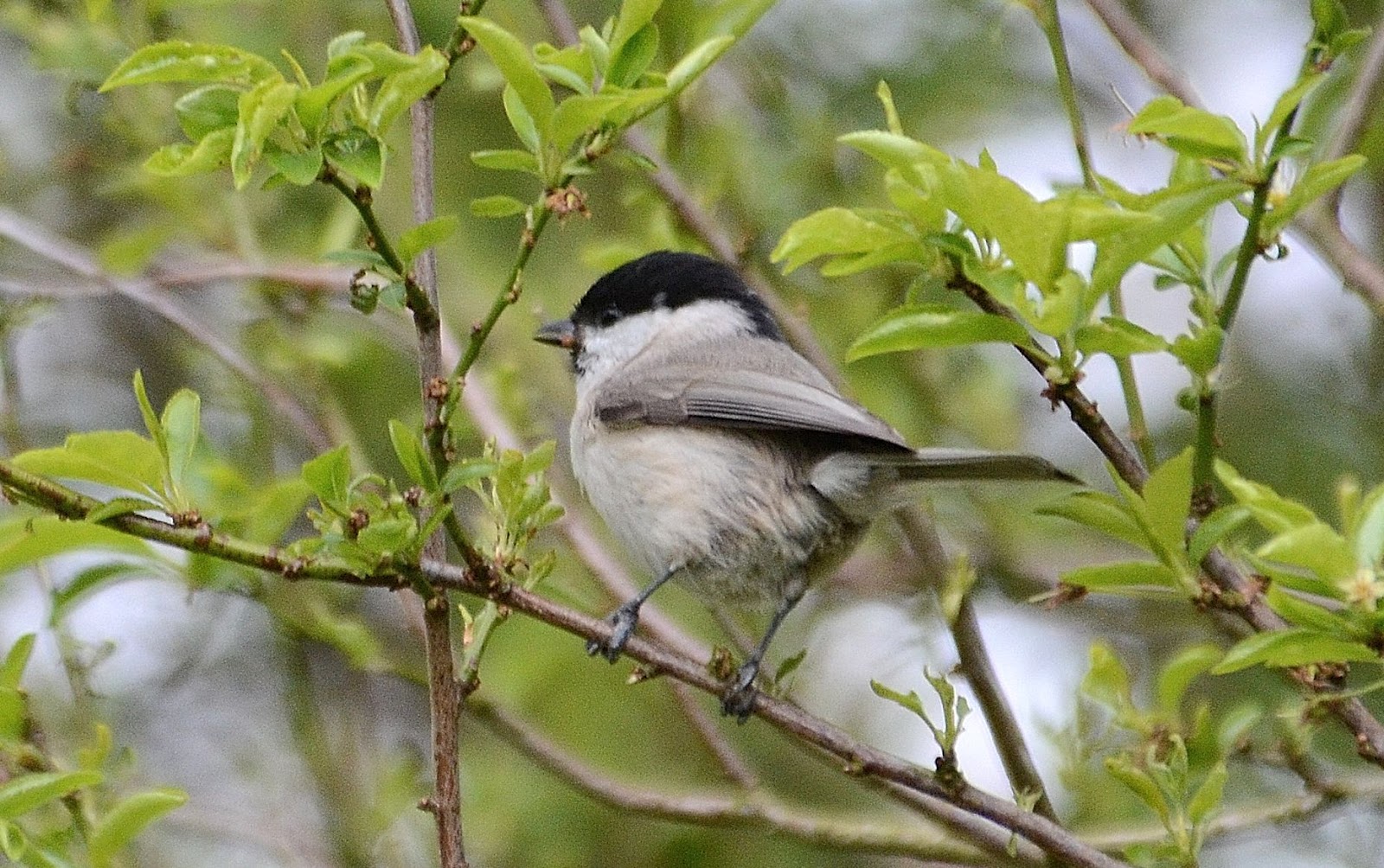
Other birds seen included Blackcaps (females too), Chiffchaff, Marsh Tits, Great Spotted Woodpeckers, and we heard the ringing laugh of a Green Woodpecker.
The am group went on a detour to see the putative Red-legged Partridge egg.
In the afternoon some of the Longhorn Micromoths with the 'ridiculous handle-bar moustaches' were flying in the shaded sunshine between showers.  Also in the afternoon a discussion was held as to whether the Garden Warbler was nice enough to be kissed.  Jim said they did have a nice, gentle look, but he wouldn't kiss one!
Plants seen apart from the glorious Bluebells included Greater Stitchwort, Climbing Cordyalis, Bugle, Wild Strawberry, Water Avens and even a few Primroses were still hanging on....


Longhorn Micromoth Adela reaumrella
 Bluebell
 "Whitebell"
 Bugle
 Climbing Cordyalis
 Garden Warbler - "Kind Enough to Kiss"
 Marsh Tit
 "Corn Dolly" Hoof Fungus
 Bluebells
 ditto

Wednesday, 9 May 2012

White Triangle Bird

The weather forecast last night indicated that rain would move slowly up the  country.  In an attempt to avoid the rain the venue was changed to as far north as we could go & still be in East Yorkshire – we may have actually just strayed into North Yorkshire.  
A Yellowhammer and Linnets were first heard & then seen from the car park.  We walked down a valley, which had been cleared of many of its scrubby bushes, so the Willow Warblers have vacated this area.  However, the am group did watch a male Whitethroat dancing around a female - a performance I hadn't witnessed before.
We plunged further down to the valley’s bottom, and despite the lack of conifers we heard and then saw a couple of Goldcrests.  Next we passed through a gate towards a scheduled ancient monument and searched the old ash trees and bushes for the Redstart Tony Robinson saw at the weekend.  A female had turned up since then, so the birds were a while before they showed, and they weren’t as confiding for us, as Tony's male had been briefly for him on Saturday.  Everyone was able to obtain a view, but they were much harder to see in the afternoon.  Despite Doug’s best efforts at finding the male Redstart it disappeared again before everyone had seen it.
25 years ago shortly after passing my driving test I took my mum to today’s location.  While I was recording some birdsong my mum spotted something she hadn’t seen before.  “A strange bird just flew past, with a white triangle on its head!”  A few questions later & it seemed she’d seen a Redstart in an area where they weren’t generally supposed to be.  However, further searching has revealed that there is a small but stable population on the Yorkshire Wolds.  They seem to arrive a little earlier in the valleys with streams, pools and other running water, but they are also present a few days later in the completely dry valleys.  I’m not sure if any survey work has been undertaken to determine just how many Redstarts breed on the Yorkshire Wolds.  This population is much further East than is generally acknowledged in references to the distribution of this species in the UK.
We went back to an old railway line and saw Marsh Tits attacking the buds of an Ash tree, but there weren’t as many hedgerow birds as usual.  This could be because the summer migrants still haven’t all arrived, but could be because their favourite hedge had been severely hacked back.  We reached the village and saw a soaring Kestrel, which a couple of ‘stringers’ tried to boost into a Sparrowhawk, but they hadn’t noticed the dark border to the tail.  Of course when it flew off normally it resumed its standard Kestrel shape.  As we approached the village sightings of Swallows, Pied Wagtails and Greenfinches increased, and in the village itself House Martins and Tree Sparrows proliferated.  We also saw a male Bullfinch here and heard the beautiful song of a Garden Warbler, which was glimpsed briefly by the am group.
We returned the way we had come, but the killer hill proved rather unpopular with some participants, so 2 set back up there early, so they could take their own time, whilst an am participant waited in the village for someone to collect her by car.  The wild flowers weren't bad today & a couple of Orange Tip butterflies were seen.
During the morning session a formation of 20 planes flew North-West with another plane leading them.  We have no idea what these planes were doing in this remote area.


**STOP PRESS** It now seems we were witnessing a training exercise of the planes for the Queen's Jubilee, which were actually flying in a formation which mirrored the digits 60!
The afternoon group jumped in their vehicles, and then the first spots of rain started.  The move north had worked out to perfection.


The first 6 photos are (c) 2012 Tony Robinson & were taken on Saturday.  The rest are from today
Redstart - the White Triangle Bird!
 Redstart
 Marsh Tit
 Sparrowhawk
 Treecreeper
Treecreeper 
 Red-legged Partridge
 Garden Warbler
 Garden Warbler
 Goldcrest
 Goldcrest
 Yellowhammer
 Pied Wagtail [female]
 Water Avens
 Butterbur
 Fly-past