Showing posts with label Chaffinch. Show all posts

Thursday, 14 June 2012

Tit Willow, Tit Willow, Tit Willow

On Thursday we revisited a trip of a couple of week’s ago.  http://www.eybirdwatching.blogspot.co.uk/2012/05/blue-sky-birding.html
The first difference this time was that there was a Yellowhammer singing right next to the level crossing, and a Tree Sparrow on a fence surrounding one of the new Rabbit hutches.  The first section of the walk was a lot quieter than it used to be only a couple of years ago, but there was a Song Thrush, Magpies and Goldfinches flying over.  At the first junction we turned left, and this is where the action started.  In the Oilseed Rape there were a couple of Reed Buntings, a Whitethroat and a massive mixed flock of finches: Goldfinches, Greenfinches, Chaffinches & Linnets.  In the afternoon a pair of Bullfinches swelled the finch species seen, as they dropped into the same crop.  At a stump there were several tiny baby birds which I assumed were Wrens in the bad light, but the photos seem to show they were Whitethroats.
Willow Tit

 Yellowhammer
 Yellowhammer
 Chaffinch [female]
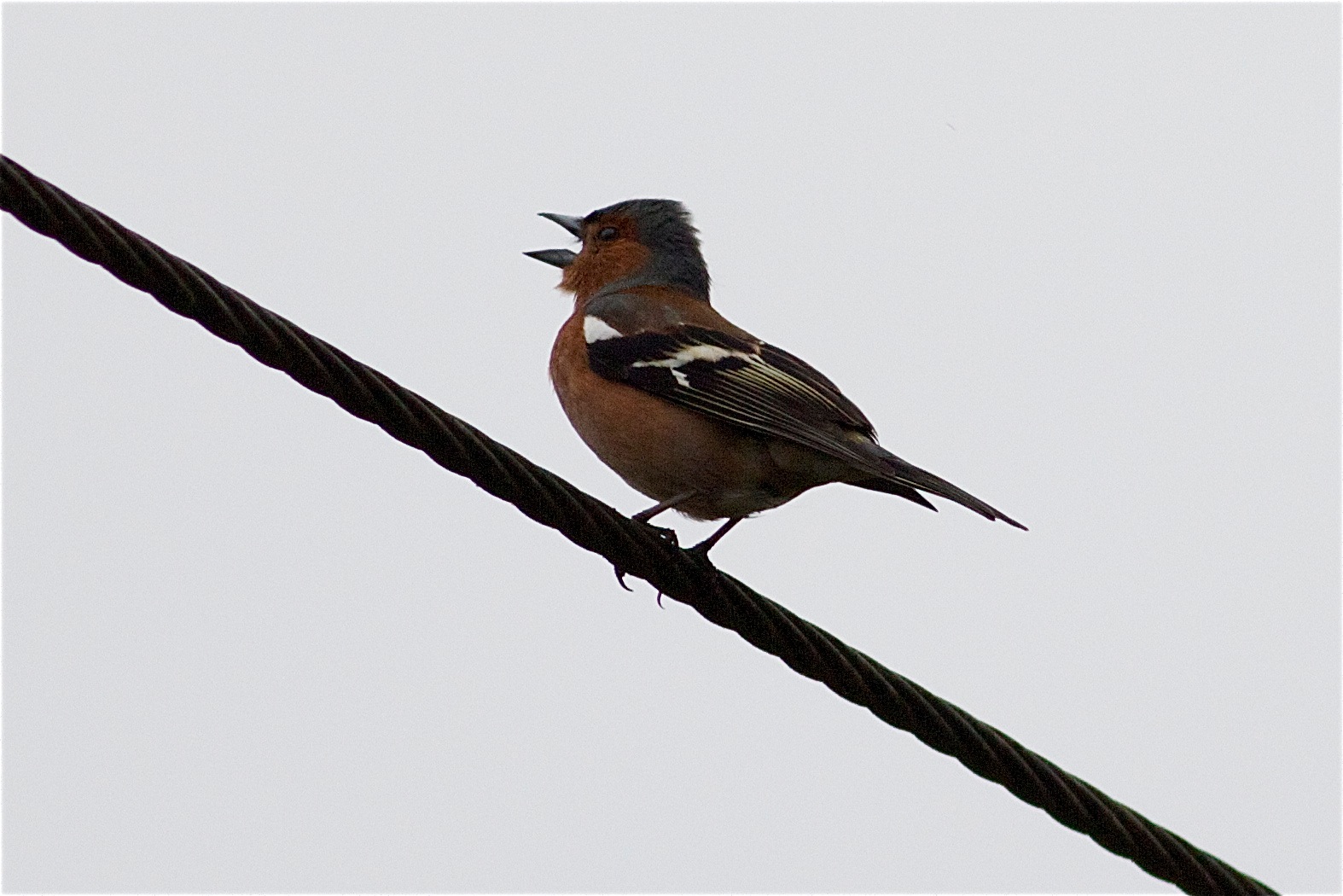
 Chaffinch [male]
 Willow Tit
 Willow Tit
A Yellow Wagtail flew from the OSR field across the path carrying food, and headed almost the whole length over a field of wheat before being lost to sight.  At the end of the path a male Great Spotted Woodpecker was observed by almost all participants, and Alan identified a pair of Bullfinches in the same area.  We started to retrace our steps and encountered our 4th Yellowhammer, and a Wren.  A little further on we heard a distinctive nasal ‘tchay-tchay-tchay’ and we were able to pick out 2 Willow Tits.  A couple of years ago I used to see Marsh Tits near here, but these were definitely Willow Tits.  Hopefully, the photos taken will prove this. The afternoon bird was the finest Willow Tit Ken has ever seen out in the wilds – the Willow Tits on the Potteric Carr bird table don’t count!   In the afternoon the birds were still present, but were several hundred yards further east.  This is the second encounter with Willow Tits in previous Marsh Tit hotspots in a week.  Are they finally making a comeback, or are young birds dispersing after a very successful breeding season, or have I just been lucky?
 Willow Tit
 Record shot of a Linnet
 Common Tern
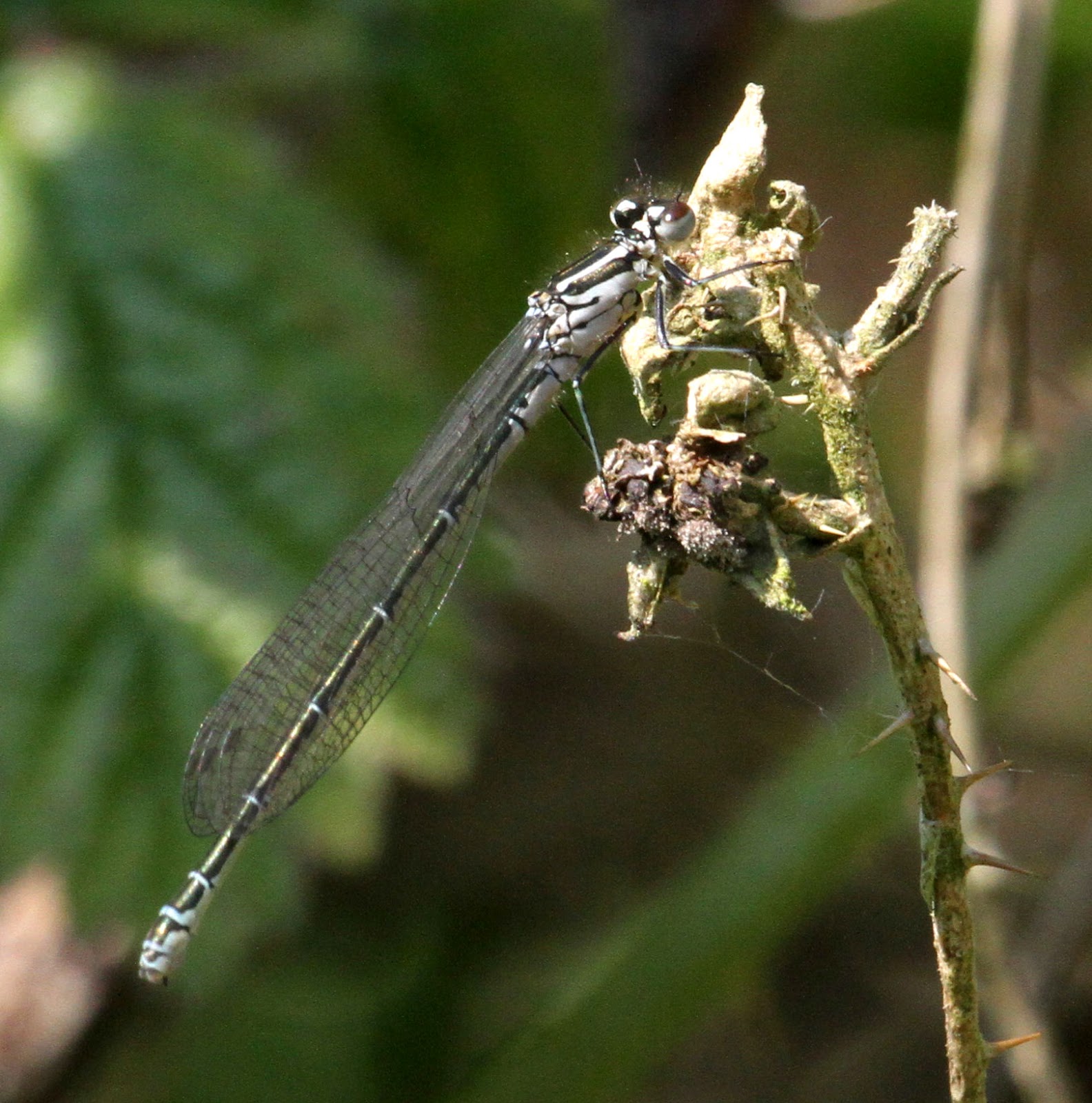
 Common Blue Damselfly

In the morning Phil spotted 3 Herons fly up from the water-skiing lake at this point, whilst in the afternoon 7 took to the air at roughly the same juncture.  Margaret was the first to spot a distant speck in the sky – a singing Skylark, even though she couldn’t hear it!  Shortly afterwards Brian found one of the best birds of the day when he saw a male marsh harrier hunting low over the wheatfield.  At the end of the lane we turned left & joined the path to the river.  On reaching the fishing ‘complex’ the air was full of many low-flying House Martins and a few Swifts.  There were a few damselflies at our feet, which I hope we managed to avoid, and soon we also saw a fresh looking Speckled Wood.  There were many more of these in the afternoon when the sun came out – but the only other butterfly was a Red Admiral in the afternoon sunning itself not far from the river, just before we surprised the skinnydippers.   The river seemed high both in the morning & the afternoon so there were no waders to be seen and only a Lesser Black-Backed Gull over the water.  In the reedbeds there was some desultory song by a Reed Warbler, and more energetic renderings by both Reed Buntings and a Sedge Warbler.  This area was almost devoid of birds in the afternoon.  
Weevil
 Fledgling Whitethroats
 Male Common Whitethroat


On the return leg there was a sharp ‘peep-peep’ to our right and shortly afterwards a Kingfisher headed through a gap in the hedge and headed towards the fishing lake.  Later more peeps were heard & I snatched a view of it returning, probably on a mission to catch fish for its chicks.  Later even more sharp calls were heard, and even Chris can now say he’s heard a Kingfisher, if he can’t actually confirm he has actually seen one.  A Blackcap revealed itself opposite the entrance to the angling complex, after singing beautifully.  The weirdest thing on the return journey was a small dark mammal (seemingly with no visible legs) moving swiftly across the road.  A Shrew seemd to be the best bet.  It certainly seemed even smaller than a mouse or vole.


Stop Press.  Here's what the UK's leading expert says of the above Willow Tit pics:  It's definitely a Willow Tit, and it's a juvenile (can tell by tail feather shape). It could be a new juvenile from this year, just dispersing, or one from last year which hasn't started the moult yet, but I'd verge towards the former because it's quite dapper. The clinching all-dark bill is evident on pretty much all of the pics. Plumage-wise, juv Marsh and Willow can be almost identical on the head at this time of year, so bib and crown is no use. The greater coverts are also distinctive (dark centres), but it's pretty subtle.

Marsh and Willow Tit juvs are dispersing at the moment (they do it as soon as they're independent, about 10 days after fledging), which is when they make the biggest movement of their lives. They normally move a few km, but could go much further (10 km or more), so it suggests that a pair might have bred nearby perhaps within 5 km, but isn't conclusive. It might also decide to keep moving before it settles, if it doesn't find a friend (they're looking for a vacant territory and a member of the opposite sex).

Thursday, 31 May 2012

A Logical Viewpoint

All pictures (c) 2012 Richard Whateley
Thursday morning was our final visit to an urban nature reserve.  Everyone but the lady from Castle Howard seemed to find it OK, but she probably isn’t used to real urban driving!  The car park was quieter in the gentle drizzle, but we did see a few Linnets, a House Sparrow and low-flying Swifts and House Martins.  I left my camera at home because my previous one ‘died’ in heavy rain, and downpours were forecast.  Richard was braver, so I’m completely reliant on him to illustrate this blog.  On the playing field there were 2 Lesser-Black Backed Gulls for the first time, and the Starlings, Rooks, Carrion Crows, Magpies and Jackdaws were still present.  A male Bullfinch flew from left to right just at the beginning of the walk but it couldn’t be relocated.  There were actually more birds singing on the walk up the hill in today’s bad weather than the 2 gorgeous days we visited last week.    
Water Vole

 Linnet
For the second Thursday am running we heard a Cuckoo, but this time despite several apparently close encounters we failed to see it.  The Warblers were harder to see this time, though we did have an early Chiffchaff near the beginning and then a definite Willow Warbler at the end.  The Lesser Whitethroat had gone silent again, and we only heard a couple of Whitethroats this time.  A Chiffchaff was heard, but it was harder to locate this time.  There were a few Blackcaps singing from deep cover on the path parallel to the Poplar Avenue, but apart from one brief flyover, again these remained concealed from sight. 
Chiffchaff
 We waited for a time on the bridge but there were fewer things to see round here too.  2 Great Spotted Woodpeckers flew from a young Ash tree on the bank & headed into the reserve towards some large Willow trees.  The adult soon flew off, but a fledgling remained for several minutes.  I don’t think everyone managed to lock onto it in time, but those that did were able to watch trying to peck at the bark for and climb the tree.  People were discussing this sighting when Phil G spotted something swimming across the drain.  Everyone spun round and got a great view of a Water Vole.  It was then busy for a few minutes on our side of the bank, because we could see the ripples spreading out from our side, but the vegetation screened it from any further views.  
Immature Great Spotted Woodpecker
 ditto
 Chaffinch
We popped into the reserve again, but took a different circular path, which took us past a Willow Warbler and the den area, which was recently featured in the local press.  There were fewer butterflies and other insects to see because of the drizzle, but we were climbing the steps out of the reserve when the Cuckoo stared calling again nearby.  Unfortunately, a Search & Rescue helicopter then flew low over us, and we weren’t able to track it down.  The final sight of the morning was provided by a Greenfinch, which at first twittered & wheezed in the car park before embarking on its slow-motion butterfly courtship flight.  A nice way to bring these urban visits to an end.
 Willow Warbler
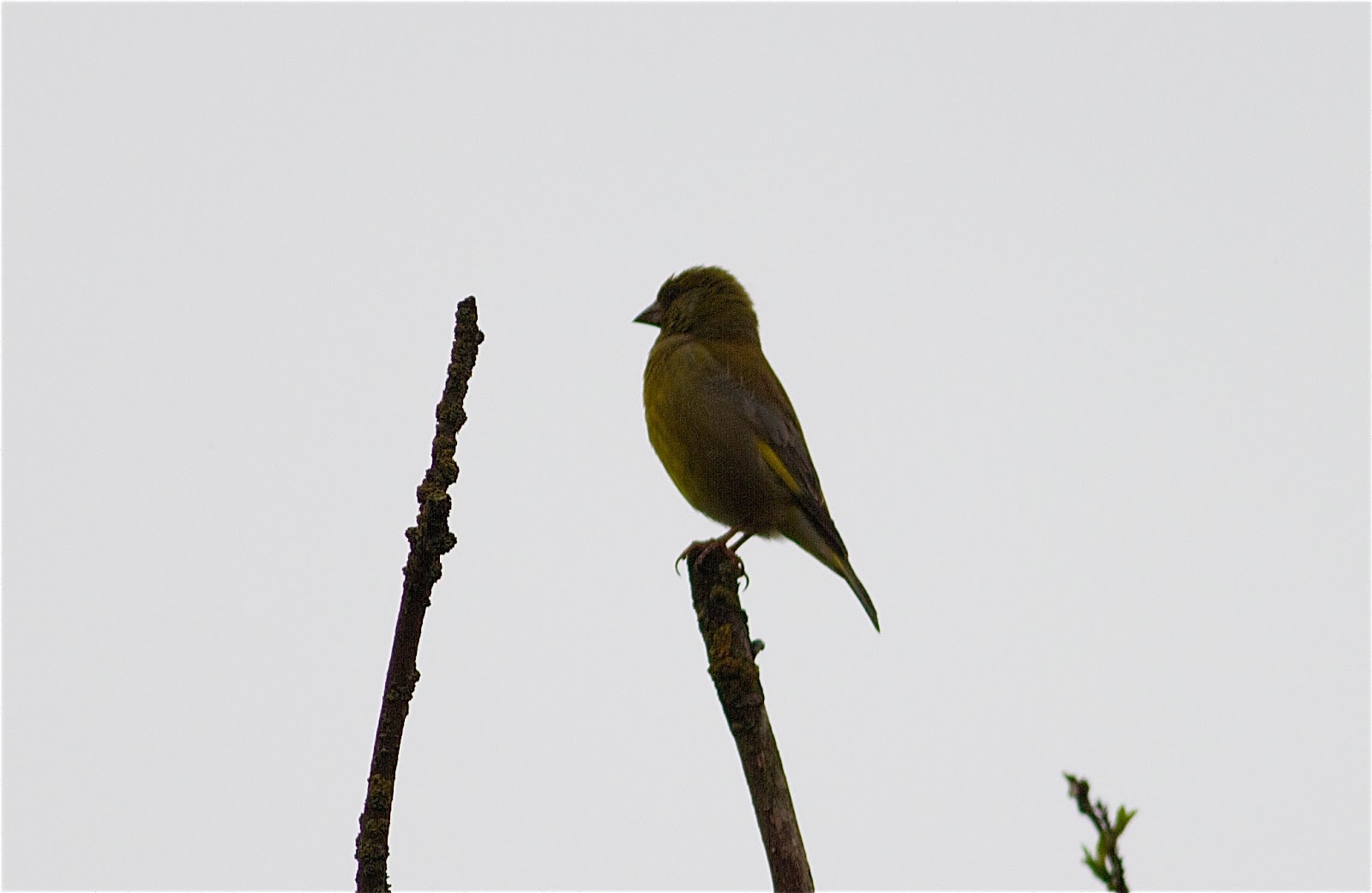
Greenfinch

Tuesday, 22 May 2012

Blue Sky Birding

Yellowhammer

Today was a bit of a shock to the system, because it was our first decent day since March.  We met in a village “almost as nice as Surrey.”  There were a few Swifts around the green, but not screaming as usual.  The most noticeable sound was a Goldcrest singing from a nearby garden.  Everyone arrived in good time & we shared cars to nearer our eventual location.  At first the lane was very quiet, apart from an initial Skylark & a Blackcap.  The usual Whitethroat & Sedge Warbler were absent, but we took the first left turn, and immediately I could hear a ‘singing’ Yellow Wagtail.  One disadvantage of the bright sun was that it was very difficult to see.  We weren’t able to get too close before it flew off across a field.  However, only a few minutes later we had great views of a Yellowhammer, and a more elusive Whitethroat.  Other birds seen round here included Wren, Chaffinch & both Great & Blue Tits.  Not everyone managed to get a view of the Yellow Wagtail, but a Yellowhammer did the honours perching right in front of us & giving every single participant great views.   We carried on to where last year there had been an industrial car park, today it was deserted and already going back to nature.  A Marsh Harrier was being mobbed by a crow towards the river.  Orange tips began to appear & Peacock butterflies started chasing each other.  The Harrier had been replaced in the afternoon by a baby Linnet being fed in an emerging Ash tree.  The afternoon group were also able to study their first female Orange-tip as we retraced our steps down this first lane.  They also had a bold male chaffinch which was determined to have a bathe, no matter how many humans peered down on it from the fence across the little bridge.  
Yellowhammer
 Orange-Tip [female]

One we reached the original junction we carried on down the main road towards the river. At this point we were passed by a bughunter extraordinaire from the Hull Valley Group.  He was looking for some Shield bugs, which he first discovered at this venue a couple of weeks ago.  This is only the 3rd site for this particular species in Yorkshire.  After he left us 3 Tufted Ducks flew towards the marsh in the am, and the first distant Reed Warbler & Reed Bunting could now be heard from the Angling complex.  We caught up with Barry Warrington here & he was able to point out everyone’s first Woundwort Shield Bugs.  Claude got her eye in first and was able to point out several more – many of which seemed to be mating. I must admit I’d never even heard of this species before.  They are smaller than most other Shield Bugs I’d previously seen, but almost look metallic in some bright sunlight.  When we returned in the afternoon some large caterpillar tracks had destroyed the first 3 feet of verge in some places, but we were still able to find some mating shield bugs, so hopefully they will survive.
Woundwort Shield Bug (c) 2012 Barry Warrington
 Woundwort Shield Bugs
 Holly Blue

A single Holly Blue flew over while we were looking at the bugs in the morning, while in the afternoon a Holly Blue landed the other side of the bridge with the bathing Chaffinch.  There were also several Blue-tailed Damselflies in the area, and what looked like an Azure damselfly.  As we came back along this hedgerow later in the morning we came across a large Hawker Dragonfly drying off on an umbellifer stalk.  
Hairy Dragonfly
 Large Red Damselfly
 Blue-tailed Damselfly
 Fenmale Azure Damselfly (Thanks to P. Ashton)
 Chaffinch
 Flies above Di's Head
 Further down the lane we hear our first Chiffchaff, and a Willow Warbler in the afternoon, which made its typical Willow Warbler song, but which also made the sound 3 times of a speeded up Chiffchaff song – not a phenomenon of which I’ve previously been aware.  The old Cormorant tree had been cut down – probably instigated by anglers.  There were no Cormorants round here anymore, but we did flush a Heron.  An Oystercatcher was heard calling, probably over the river & there was a single Great Crested Grebe & a Mute Swan on the main lake.  While we were scanning the lake a couple of Common Terns went over us, but there was very little else to see here.  As we continued a Lesser Black-Backed Gull flew over & there was a Black-headed Gull over the river.  At the end of the lake the searching for Reed Warblers was hampered by 3 noisy dogs splashing in the water.  

As we looked out across the river a Cormorant flew across to the south bank in the morning, whilst in the afternoon about 6 were sitting on a sandbank now that their tree had been denied to them.  On the return journey a Blackcap sang clearly quite close to an abandoned garden, whilst in the afternoon a couple of Bullfinches were heard near here.  Finally, a new butterfly species was a Comma which landed on a stump of a tree for a few minutes.  The afternoon group especially, seemed quite dehydrated & at least 3 of them repaired to the local hostelry for a refreshing cool drink.
Weevils
After the morning session David & Steve moved on to another site where Steve noticed a Spotted Flycatcher!
 Spotted Flycatcher (c) 2012 David Tasker

Sunday, 13 May 2012

Open Day Plus One

Kingfisher - Bird of the Day (Old Photograph)
All other photos were taken today
Yesterday was unusual in being a working day, but what was even more unusual was that Sunday was a working day too.  Of course, there are many people who would argue that what I do can’t really be called working!  Yesterday was the occasion of the first official opening of Hull’s first nature reserve, and today I was involved in a Birdwatching Walk for Beginners round the Noddle Hill Nature Reserve. 
As I walked from one car park to the other I heard a grating squawk on the playing fields, and there were my first juvenile Starlings of the year.  The only other birds in this area were some grazing Greylag Geese.  Most of the rest of the participants were waiting in the Anglers Car Park where we were serenaded by a Chaffinch.  From here it was also possible to hear a Reed Warbler singing from the lake and someone spotted a Greenfinch wheezing from some bare twigs.  At least 12 people had booked, but plenty of children also attended.  Steve from the Yorkshire Wildlife Trust made a short introduction and we began.  I tried to spot the birds at the front of the group, while Steve concentrated on keeping those at the back of the group informed of what we were seeing. 
Starlings
 Chaffinch
 Orange-Tip
 Willow Warbler (can't see its pink legs)
We squeezed into Red Admiral Alley where we immediately heard a Chiffchaff, soon followed by a Blackcap and a Robin.  We didn’t see a Red Admiral, but we did observe an Orange-tip nectaring on a dandelion, swiftly followed by a pair of fighting Speckled Wood butterflies.  Towards the end of the alley we were treated to the wonderful cascading song of a Willow Warbler, as it sang from of all things, a Willow tree.  This provided a welcome contrast to the previous bird, which had been the monotonous ‘song’ of a Collared Dove.  As we were about to emerge from the alley a few Swifts and House Martins flew about, but by the time we were back in the open they had all moved on.  
Carrion Crow
 Reverend Reed Bunting
We struck out into more open country and this is where we encountered the biggest problem of the day: the very strong winds.  Despite the wind we spotted more Greenfinches on the wires, a few Linnets, and a single Skylark flew over the crowd of cattle.  Shortly afterwards a Magpie quickly flew away when it saw us coming.  It was about this moment that we flushed a pair of Red-legged Partridge.  We traversed the full length of the site towards Foredyke Drain & on the way saw plenty of Linnets flying around, and several Whitethroats performing their ‘puppet on a string song flight’ before diving into thick bramble cover again.   Carrions Crows perched on the hawthorn bushes & a few were feeding in the flooded meadow, which in the late afternoon, evening and night is transformed into the hunting ground of the Short-eared Owl.  When the drain was in sight I could hear the simple repetitive song of a male Reed Bunting, so we were able to inch our way towards it until everyone in the group had seen it.  Once everyone had taken a look I crept a bit nearer to take a picture.
We followed Foredyke Drain towards the pumping station.  On the way we had some great views of singing Skylarks and I spotted some owl pellets on the ground in the middle of nowhere which can only have come from Short-eared Owls.  We reached the junction with Holderness Drain, but the strong winds meant that there were much fewer birds around than our previous visit: http://www.eybirdwatching.blogspot.co.uk/2012/05/new-reserve-gets-nod-of-approval.html
Everyone was able to catch up & we had a breather from the walk and the wind.  Unfortunately, even the Tree Sparrows didn’t appear to be hanging around their nest holes.  Steve and I were just having a short chat when I heard the tell-tale high-pitched squeak of a Kingfisher.  I was in time to let everyone know it was flying past & everyone swung round to gaze towards the drain.  Luckily, most people saw the bird, but the force of 15 faces swinging round to look at it, meant that the Kingfisher quickly let its DNA fall into the water before lifting into the air and flying over the lock.

Linnet
 Chiffchaff (black legs)
 Bottoms Up! (Greylag Goslings)

On the return journey we saw a Kestrel being mobbed by a crow, and the front section of the crowd had a brief glimpse of a Sedge Warbler, but it went to ground in a bramble bush and refused to come out.   On the way back a Linnet actually posed near enough to snatch a photograph.  As we walked round the lake I heard the mournful piping of a Bullfinch, which then flew over our heads & straight above the island without perching in the open for everyone to have a good look.  However, a Chiffchaff was more obliging as it sang much lower down than normal. Then we were back in the car park.  Despite the strong winds, I’m sure everyone learned something, and I hope they will return on a less windy day.
On the way back across the playing field to my car I saw a final new bird of the day: a Pied Wagtail.  This took the final tally of birds to exactly 40, which is quite respectable considering the lousy wind!