Showing posts with label Cormorant. Show all posts

Monday, 19 February 2024

Winter Half-Term

On Friday the forecast wasn't too bad, so I made the 248-mile-round trip to the Richmond area looking for Black Grouse.  At first the whole area seemed devoid of birds.  I was at the point of giving up when I spotted a dark, plump bird perched on a crumbling drystone wall.  Of course it was drizzling at the time.  On closer investigation it turned out to be a Black Grouse, as I looked for my wellies a female joined him on the wall, but by the time I left the car she had gone.  Peering over the wall I spotted more males in the field between the next wall, and there were actually nine birds either on the next wall or in the field.  needless, to say this is the largest number of this striking species I have ever seen.  This is a bird we just have no chance of spotting in the lowlands of East Yorkshire.  
Black Grouse
ditto
ditto
7 of the 9
A Little Closer

A Little Closer
Zooming In
Ignoring the Nearest Bird!
Meanwhile, on the opposite side of the road...
Red Grouse
ditto
ditto
ditto
ditto
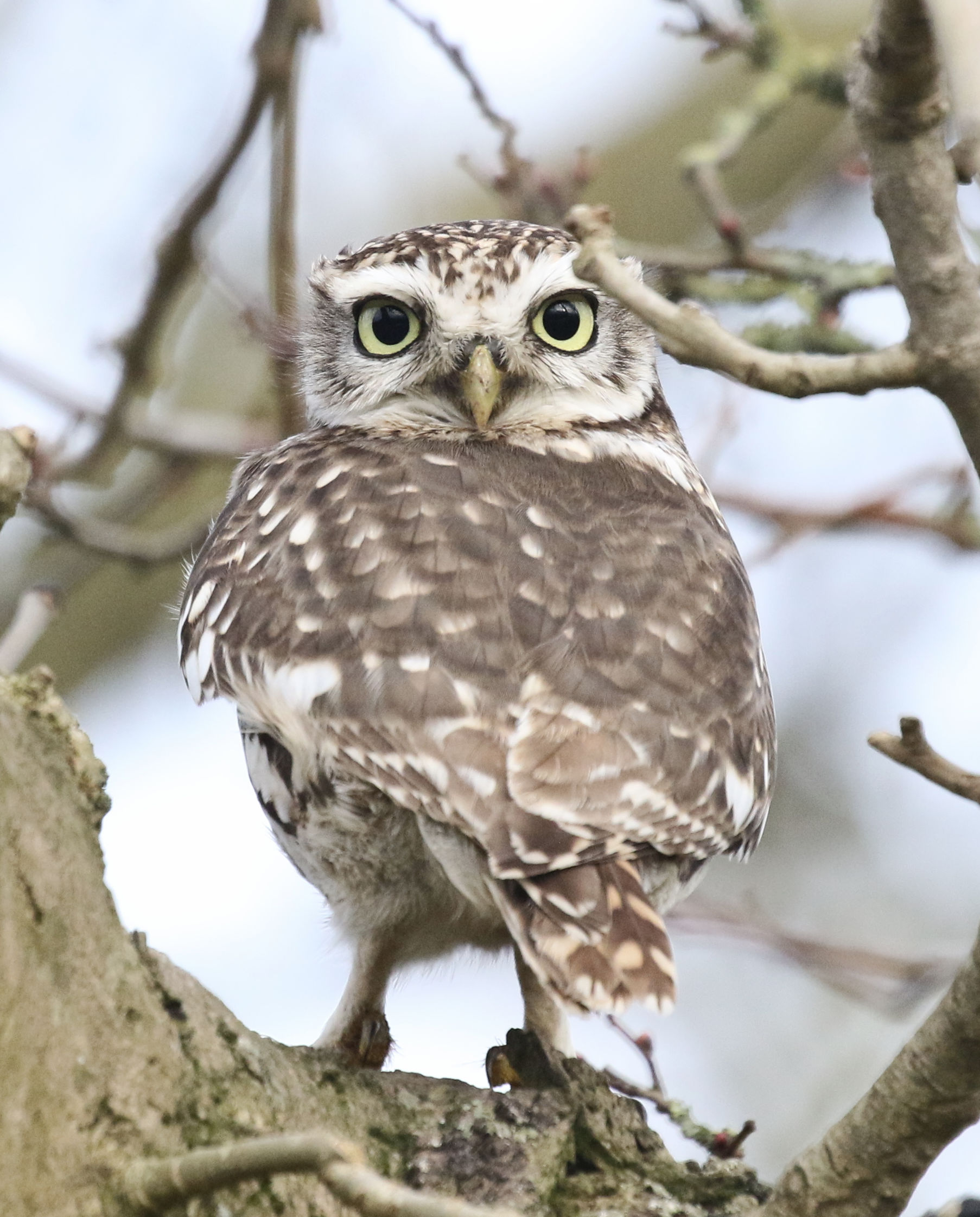
Back at the weekend staple of Stone Creek, I was surprised how few Short-eared owls were flying after a night of heavy rain.  Even the Barn Owls were late to emerge.  However, the Little Owl turned up trumps two visits running.
Kestrel
On a Haystack
Little Owl
Ditto
ditto
Some Little Egrets - there were 26 in this one field
ditto
Record Shot of Barn Owl
Little Owl
Some of the Wednesday am group went up to Scarborough during the break, but were disappointed with what they found.  The only bird in the harbour was a Great Northern Diver.  No Red-breasted Merganser, no Red-throated Diver, no Purple Sandpipers, not even any Turnstones!
Great Northern Diver (c) 2024 Tony Robinson
ditto
ditto
ditto
However, they did see plenty of Crossbills at the Raptor Viewpoint, although the light was rather poor.
Record Shot of Crossbills (c) 2024 Tony Robinson
Cormorant (c) 2024 Tony Robinson
Thanks to Sally Simpson for making a Delicious Lemon Drizzle Cake

Tuesday, 8 January 2013

Happy New Year


It's been a long time since a blogpost, but I've been busy trying to contract diabetes over the past 6 weeks, so had nothing to post about.

Today was the first class of 2013. We started at a large local park. The first surprise arrived in the initial 5 minutes when I heard a Jay. On investigation it appeared that a pair had been present since November, and had even been since recently nest-building, but we don't see to for ourselves. One class member was quick enough to spot a scruffy urban fox, but the rest of us weren't so lucky. There were Long-tailed & Blue Tits near the car park. We then had a long walk punctuated only by Starlings & House Sparrows. For beginners the differences between Common & Black-headed were pointed, and later juvenile and adult Herring Gulls were added to the mix.

All pics (c) 2013 Chris Cox
Goosander (Drake)
 Goosander (female)
 Ditto
 Ditto
 Pochard (drake)
 Tufted Duck (female)
On the water Mallard including many 'mongrels' were differentiated, and in the afternoon we discovered 2 apparent Pintail hybrids. More straightforwardly the lake had Tufted Ducks, Pochard, Greylag & Canada Geese, an immature Cormorant and in the afternoon a very brief glimpse was obtained of a Great Crested Grebe. However, the true stars of the water were approximately 30 Goosanders spread throughout the park. Occasionally, these gave very good views, but the light wasn't brilliant for taking photographs. 
The Kingfisher, Heron and Little Grebe didn't survive the previous 3 winters, and don't appear to have returned, and there wasn't even any sign of last years parakeets.
On the return journey the morning highlight was provided by a pair of Goldcrests, whilst in the afternoon we couldn't relocate them, but we did find a pair of Siskins instead. Here's hoping for better light next time.
In the morning every participant wished everyone else a Happy New Year, but in the afternoon as far as I could tell no one bothered.  Is that another difference between mornings and afternoons?

Friday, 9 November 2012

A World Without Love

This morning we tried the southern section of Tophill, mainly because a Bittern had been seen going in to roost yesterday evening, but we didn't have any luck. There were mainly Tufted Ducks with a few Goldeneye on 'O' reservoir, although a female Sparrowhawk flying just over the surface enlivened things. Watton Borrow Pits was the best for variety of species with: Curlew, Wigeon, Teal, Cormorant, Gadwall, and Jackdaw. Then 40 Curlew had just settled themselves on the green peninsula when the female Sparrowhawk appeared again & they all took off. They later landed among the safety of the Cormorants on the muddy strip.
All photos (c) 2012 Richard Whateley
Cormorant
 Curlew
 Shoveler
 Wigeon
 Gadwall (& Tufted Duck left)
 Teal
Things perked up again from D Reservoir where there were plenty of Shoveler and Wigeon, and suddenly Richard spotted 15 Swans & although they went out of sight without us gaining decent views, when we checked his photos they did appear to be Whoopers. They flew along the river Hull, so were soon lost to sight.
In the lunch hour I got out my spade and flattened a muddy area in the hope that either tonight or tomorrow night an Otter will leave some nice clear tracks to show for Sunday's Otter Walk!!

 Record shot of Whooper Swans
 Goldcrest
Coal Tit


It was the poorest turnout on Thurs pm we have ever had before with only 3 participants arriving. What a difference from the morning group, which is currently the largest of any of the groups, and ensure all the hardest are full. Nearly everyone had already sent their apologies ahead of the session, but the 60's pop duo who had their best hit with 'A World Without Love' hadn't let me know they wouldn't be coming, so let's hope they will still be performing together in the future. In the afternoon we took the risk of heading north through D woods. This was a risky strategy because apart from a flock of more than 20 Siskins we didn't see much of interest. We then surveyed D Reservoir & saw mainly the same birds as the am, but we did manage a count of 10 female Goldeneyes.

Friday, 21 September 2012

Disappearing Waders

It was very drizzly on Thursday morning when we returned to last Wednesday's location. We went to Townend Hide first where there were plenty of waders to see. The largest island was covered in Snipe with 2 Spotted Redshank nearby and a Dunlin on the other side of the island. There was a scattering of bog standard Redshank all over the water with a large Heron stalking at the back of the reeds. Some Teal were dabbling and and a Shoveler and a small flock of Gadwall flew West. A flock of Ringed Plover flew west, which was more surprising. We stayed a long time and eventually a Marsh Harrier flew past. 4 Greenshank flew in and the Spotted Redshank left around the same time. Some large fat Plovers flew over, which may have been Grey Plovers, but we're more likely to have been Golden Plovers. Towards the end of our stay about 12 Black-tailed Godwits flew in and started feeding.

All photos on this post (c) 2012 Richard Whateley
Black-tailed Godwits
Snipe
Redshank
Greenshank
Black-headed Gull & Dunlin
Meadow Pipits

It was very drizzly on Thursday morning when we returned to last Wednesday's location. We went to Townend Hide first where there were plenty of waders to see. The largest island was covered in Snipe with 2 Spotted Redshank nearby and a Dunlin on the other side of the island. There was a scattering of bog standard Redshank all over the water with a large Heron stalking at the back of the reeds. Some Teal were dabbling and and a Shoveler and a small flock of Gadwall flew West. A flock of Ringed Plover flew west, which was more surprising. We stayed a long time and eventually a Marsh Harrier flew past. 4 Greenshank flew in and the Spotted Redshank left around the same time. Some fat Plovers flew over, which may have been Grey Plovers, but were more likely to have been Golden. Towards the end of our stay about 12 Black-tailed Godwits flew in and started feeding.

On to Singleton where there were fewer waders, but a lot more ducks. A young Cormorant was on the island, but took off when the Black-headed Gulls moved in. There were plenty of Shoveler and Gadwall, and a couple of Little Grebes.
We missed out First Hide because there was only a Coot and we headed to Marshland. The birds were mainly roosting here with Spotted Redshank, Snipe and a couple of Greenshank being the best of it. Every member of the hirundine family went over with Swallows in the majority, with a few House Martins and even less Sand Martins. Richard spotted a Kestrel hovering in the distance. 
Near Xerox I heard a Willow Warbler and then suddenly a flock of mainly Long-tailed Tits appeared with a few Great and Blue Tits in tow.
In the afternoon it became hunt the wader with very few waders to be seen. A pristine Hobby flew right along Singleton, but only Eric and myself (as well as some strangers) saw it. In contrast most people saw great number of Lapwing fly up in the far distance and then at the back of the group the fast wing-beats of a hunting Peregrine could be discerned. It made its way all along Alkborough Flats, and apart from a brief detour to chase a small bird, it carried on heading south east until it was lost to sight. A Marsh Harrier came a lot closer and was particular enjoyed by Gordon. We saw plenty of waders drop into Townend, but when we got there there was nothing.  Eventually a Black-tailed Godwit dropped in, at least it was a new bird for the pm session. Eric also later picked up some Bearded Tits, but the rest of us had already left Townend by then. Marshland was much more disappointing than the pm with only a Pied Wagtail, some Snipe and Teal putting on much of a show. Brian spotted some small birds at the back of Marshland - the first were Reed Buntings, but the final birds he noticed were a couple of juvenile Reed Warblers.  There wasn't a sign of the best birds last week - all the Ruff seemed to have continued on their migration south.  I'm not sure if the poor afternoon was a result of the outgoing tide, or the fact that a lot of places are less interesting after lunch.