Showing posts with label Kestrel. Show all posts

Monday, 19 February 2024

Winter Half-Term

On Friday the forecast wasn't too bad, so I made the 248-mile-round trip to the Richmond area looking for Black Grouse.  At first the whole area seemed devoid of birds.  I was at the point of giving up when I spotted a dark, plump bird perched on a crumbling drystone wall.  Of course it was drizzling at the time.  On closer investigation it turned out to be a Black Grouse, as I looked for my wellies a female joined him on the wall, but by the time I left the car she had gone.  Peering over the wall I spotted more males in the field between the next wall, and there were actually nine birds either on the next wall or in the field.  needless, to say this is the largest number of this striking species I have ever seen.  This is a bird we just have no chance of spotting in the lowlands of East Yorkshire.  
Black Grouse
ditto
ditto
7 of the 9
A Little Closer

A Little Closer
Zooming In
Ignoring the Nearest Bird!
Meanwhile, on the opposite side of the road...
Red Grouse
ditto
ditto
ditto
ditto
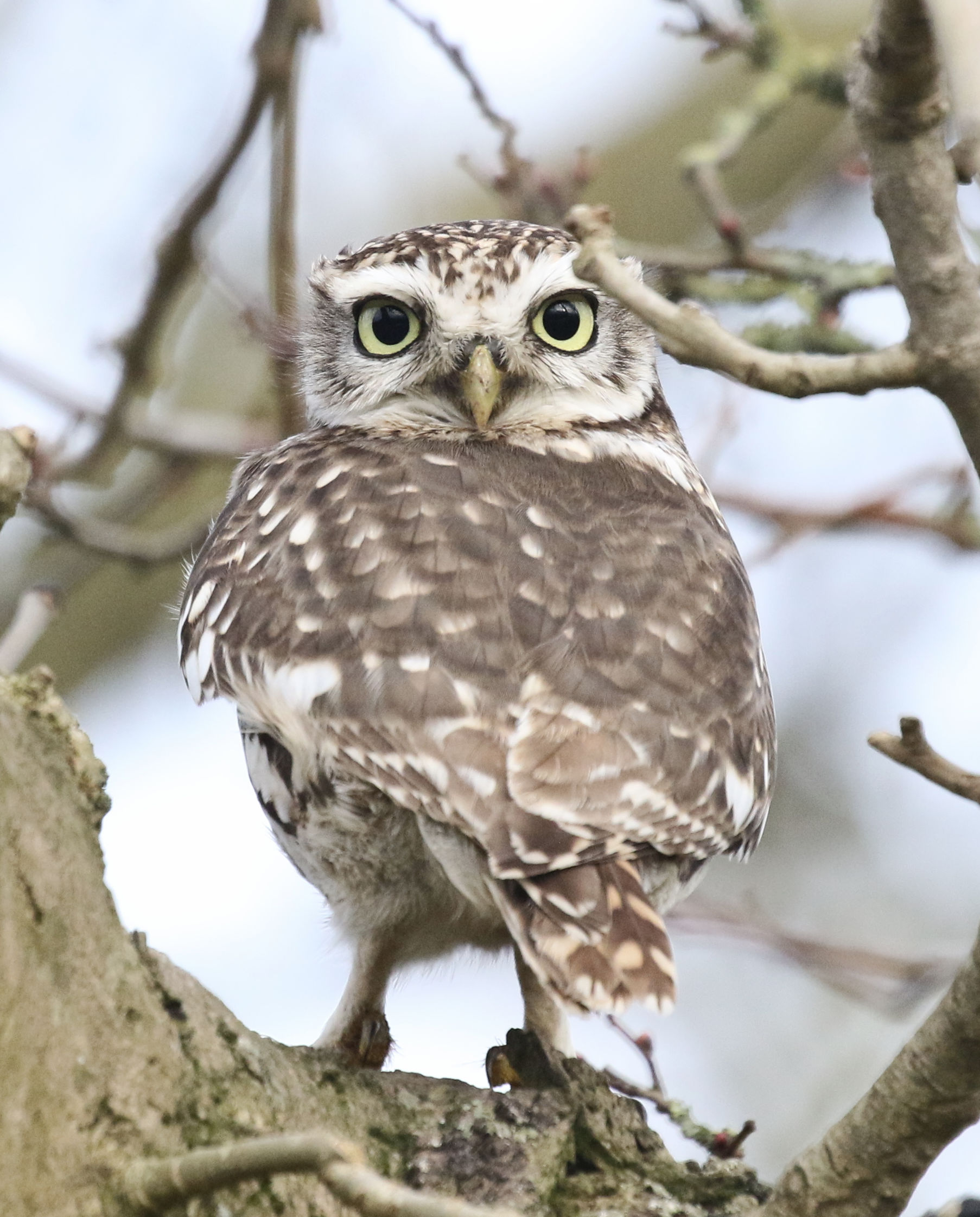
Back at the weekend staple of Stone Creek, I was surprised how few Short-eared owls were flying after a night of heavy rain.  Even the Barn Owls were late to emerge.  However, the Little Owl turned up trumps two visits running.
Kestrel
On a Haystack
Little Owl
Ditto
ditto
Some Little Egrets - there were 26 in this one field
ditto
Record Shot of Barn Owl
Little Owl
Some of the Wednesday am group went up to Scarborough during the break, but were disappointed with what they found.  The only bird in the harbour was a Great Northern Diver.  No Red-breasted Merganser, no Red-throated Diver, no Purple Sandpipers, not even any Turnstones!
Great Northern Diver (c) 2024 Tony Robinson
ditto
ditto
ditto
However, they did see plenty of Crossbills at the Raptor Viewpoint, although the light was rather poor.
Record Shot of Crossbills (c) 2024 Tony Robinson
Cormorant (c) 2024 Tony Robinson
Thanks to Sally Simpson for making a Delicious Lemon Drizzle Cake

Wednesday, 14 November 2012

Owl Before Noon

We set out from the Humber Foreshore car park again and headed towards reclaimed land.  There were no Jays this time, and the Fieldfare had moved off from last week's location, plus the Twite seemed to have done a bunk.  Despite this there were quite a few waders in the inlet - mainly Redshank, but also a single Bar-tailed and a single Black-tailed Godwit.  Out on the Humber mudflats there was a large flock of Golden Plover and there were plenty of Shelduck sprinkled over the mud. 

We checked the 2 water-filled ditches, but there was only another Redshank.  We clambered a couple of stiles and walked along the flood embankment.  There wasn't a great deal to see - no Bramblings or Fieldfare in the hedge, but then luckily, I spotted a Short-eared Owl.  This flew quite close to us before flying high over the houses and disappeared north.
All photos of Short-eared Owl (c) 2012 Maggie Bruce


In the afternoon we spent much longer in the car.  Unfortunately, because we started at 1pm we couldn't actually find an owl of any persuasion.  Instead we must have spotted over a dozen Kestrels, and we counted at least 27 Roe Deer.  We also came across a flock of 200+ Fieldfare feeding on the ground with just a couple in the Hawthorn hedge.  It's a great place for watching wildlife without having to leave a car, so is a perfect venue during extremely cold weather.  

Monday, 8 October 2012

Avian Mexican Wave

Yesterday was the Autumnal meet of the Yorkshire Birdforum Group at Spurn.  When the Hull contingent arrived at about 7.45 most of the West & North Yorkshire delegates were already in place Seawatching on the 'cliff' at Kilnsea.  They were spotting Gannets, Red-throated Divers and a few Manx Shearwaters, plus hundreds of Little Gulls.  It was obvious that there were going to be very few land-based birds.  Highlights of these at this site were a female Merlin flying past the Blue Bell, a Heron which came in to land on Borrow Pits, and a few birds migrating South.

High tide was at 10.13, so an hour before then we headed down the point towards Chalk Bank Hide.  Some selfish fisherman had abandoned their cars in the wrong positions, unnecessarily blocking the parking area.  The Hull birders (& guest) were just about able to park here, but the others had to find spaces near Wire Dimp and walk back.  They spent an inordinate time looking at a Kestrel perched on the Heligoland trap in the hope it would transmute into a Merlin.

It was rather slow from the hide - the land had changed, and at first the bird were behind a bank.  It was a fairly low high tide, so the waders weren't driven really close to us.  However, some mean, large gulls took off at one point from the middle of the flock of Knot, so they took off and treated us to some amazing balletic displays of Avian Mexican Waves.


A Pulsating Flock of Knot
 Now the Wave Begins
 The Wave Breaks & Separates
 How Many Birds in this Picture?
 More Colour Changes
 Transformation from Dark to Light
 Grey Plover
 Oystercatchers
 Ditto
We went on to the Point, were there were just a few migrants in the bushes.  Goldcrests were calling from some of the wild privets, Chiffchaffs and Blackcaps were scoffing the Elderberries, and a Redwing was briefly glimpsed.  At the green beacon we saw another Merlin and more than 300 Pink-footed Geese flew south in 3 separate phalanxes.  

The final venue was Sammy's Point were the highlights were a Rabbit, which I was able to transform into a Golden Plover, and a Stock Dove a mile away among a Woodpigeon flock. 

Pink-footed Geese
 Gannets Entering the Humber


Tuesday, 18 September 2012

Brings a Lump to the Throat

On Tuesday the group arrived in good time to witness some birds being ringed at Spurn by Paul & Adam. We saw 3 young Tree Sparrows being ringed after they had been trapped in mist nets. Paul was able to show the group differences between a Tree Sparrow hatched much earlier in the season with one born more recently. The youngest one did not yet have a nice chocolate brown cap or its beauty spot. Both of them still had the remains of their yellow gape. 

 Juvenile Black Kite
ditto
ditto
 ditto
 Meadow Pipit
 Sheep headbutting a Yellow Wagtail
 Juvenile Yellow Wagtail
 Common Lizard
 ditto
 Hawker eating a fly

We travelled quite a way down the peninsula to a Heligoland trap to observe other birds being ringed. At wire dump there were about 4 ringers waiting, but no birds. We waited quite a long time and although several Meadow Pipits approached the trap they showed very little inclination to enter. However, eventually one was trapped and recovered. Its measurements we're taken and it was weighed, and then some of the salient points on why it was a young Meadow Pipit were made clear. The bird's extraordinary hind claws were also pointed out to the amazement of the class.

After the ringing we had a look from Chalk Bank hide, but the tide had long gone out, so nothing was very close. A man in the hide reported a Manx Shearwater being ripped apart from gulls, but he later changed his story to say it was a Guillemot. Some Curlews, Oystercatchers and Sanderlings were spotted in the mud, and in the far distance was a mass of what looked like white pebbles, which must have been Knot.
We cut our losses and went north to Canal Scrape hide. Three was very little here apart from a moribund juvenile Kestrel and a Meadow Pipit. Later, a Pied Wagtail and then a juvenile Yellow Wagtail were spotted. The latter was under the feet of the sheep at first, but when they moved nearer it followed them, so everyone was able to get a closer look. 
We were watching the Kestrel take to the air when a large raptor hove into view to the very right of our vision. At first it looked like a Marsh Harrier, but nothing fitted, and then I caught a quick view of an apparent vent in the tail, and i realised it was a kite.  It clearly wasn't a Red Kite, so I called it as a Black Kite.  I took a few shots, and then ran to the car for the radio.  It had been observed by the others, and they were frantically giving out its latest position to a Spurn regular who was speeding to the site, so he could get on to it.  It headed north, and as far as I know disappeared between Kilnsea and Easington.  Some of us at the time noticed what appeared to be in lump in its throat, or gizzard.
Just before the afternoon session started a Hobby zipped through, heading south. Then we went to Kew Villa to see any birds being ringed after being caught in their mist nets. Just before Kew Villa the group watched a large Hawker dragonfly eating another insect.  The first bird we saw being ringed was a Blue Tit. This was a young bird, and was probably born elsewhere, as all the local birds have already been ringed. Although the only other bird they saw being ringed was a Dunnock, they were able to ask plenty of questions and find out lots of information about birding. 
We walked the triangle and saw a couple of Wheatears being severely battered by the wind. There were Redshank on the estuary, and some Golden Plovers, but the light made seeing another birds very dissimulation, especially in the very uncomfortable winds. A visit to Canal Scrape was not very eventful, so we made our way back to the car park. To end on a positive note our visit raised £80 for Spurn Bird Observatory Trust.