Showing posts with label Merlin. Show all posts

Tuesday, 27 November 2012

A Day to Remember

Today was quite different from any previous outing, as our main target was a specific iconic architectural structure, rather than lots of varied wildlife species. Several months ago the prospect arose of taking a group to Spurn Lighthouse. A date was booked with Spurn's YWT warden, Andy Gibson and then a message was sent out to all past & present course members. The demand was phenomenal with all 20 places going after a little over 24 hours. None of my birdwatching trips have ever filled up so quickly. So perhaps I should switch to pure tourism? How many would enrol on a trip to all the places in East Yorkshire which inspired J. R. R. Tolkien during WW1, or those visited by Philip Larkin? Perhaps I'll stick with the birds!
The Icon

The bird of the day was actually just outside Easington when a small raptor flew over the bonnet of Sue's car. As Sue continued on her way, I checked no one was behind, and then reversed for a better look. It had landed in a field partially covered with a winter crop. It was one of the best views of a female Merlin I've ever had. I only managed a quick glance before I noticed another car coming up behind. It flashed its lights because I had almost reversed into the the centre of the road. Not realising it was one of today's visitors, I didn't point out the bird, but continued on my journey.
Merlin [at Spurn on a previous occasion]
We met at the Blue Bell at 10 o'clock. The couple from Leeds made it to Spurn before many who lived a lot closer. We shared cars to the point car park, whilst the radio crackled out details of arriving Waxwings, Blackbirds, and a Ring Ouzel. In the meantime Little Auks and a Pomarine Skua were seen from the Seawatching Hut. We had a look from the seaside, but apart from Great Black Backed Gulls there were relatively few birds to see. We did manage to spot several single birds struggling into the northern wind, and these included 2 Fieldfare and a total of 3 blackbirds including males & a female. We walked round to the lighthouse for our appointment at 11am. 
A Less Common Perspective
We tried to find the leeward side round the lighthouse to get out of the strong winds, but the way the wind swirled and tacked around the building, there didn't appear to be a leeward side. Andy gave a 20 minute talk about the lighthouse's history and construction details, and opened himself up to questions and answers.  He was also able to outline some of the Yorkshire Wildlife Trust's plans for the  future of this stunning landmark. Then 20 out of 21 attendees climbed the many spiral stairs to the building's summit, taking especial care not to crack their bonces on the narrow final straight ascent. 

Although it was fairly cloudy we were treated to panoramic views of the surrounding unique landscape. There was a crack in the glass and the wind whistled through there at a terrific speed, but that only added to the atmosphere. We had learned that the lighthouse was never actually manned with a living human inhabitant, but we did see evidence that a bird had once lived in the tower, if only for a short period.  Later Andy opened the final door on to the gallery, although for health and safety reasons no one was allowed to venture outside, but I was able to stick out my camera to try and take an unobscured photograph of the view to the north.  
A Previous Inhabitant - a Feral Pigeon, so that's OK, then
 The View Looking North including the Beach
 The View Looking North West including the 'Greedy Gut'
The drive back to the Blue Bell was uneventful, but as we were getting out of our cars a flock of Waxwings were spotted heading north up Beacon Lane. We tried for a better view, but could only find flocks of Starlings, and very little else. Although it wasn't a great day for birds, the participants were very enthusiastic after their trip to the Lighthouse, and I can't remember so many handshakes and good wishes. It will be  a day every participant will probably remember for the rest of their lives! I'm hoping we will be able to organise another visit during a more congenial time of the year, possibly to arrange an event, which marries the architecture with an enjoyable wildlife experience. The event also raised over £60 for the Yorkshire Wildlife Trust, so whilst the visitors had a day to remember our hosts earned some money which will go towards protecting wildlife in our great county!

To find more tourism events in the area, please visit Yorkshire Nature's Triangle

Thursday, 8 November 2012

A Day of 2 Halves

Yesterday's birding sessions took place with a difference - the majority of the classes took place from the security, comfort and warmth of our cars. We met on the banks of the Humber and shared cars into the depth of deepest, darkest Holderness. There were relatively few birds at first, although there were plenty of Blackbirds and Fieldfare. Eventually we saw more and more Curlews in stubble fields, probably looking for worms. We continued until we reached a very muddy area where we had a look around. There was no sign of the once guaranteed Kingfisher in its normal place, but Common Seals were basking on the mudflats. Also on the estuary were large numbers of Golden Plovers with smaller amounts of Grey Plovers, Shelduck, and Mallard. On the creek itself there were several Redshank, and a couple of Bar-tailed Godwits. 

Hen Harrier on a previous visit (a mile from where we saw it yesterday)  (c) 2012 Vince Cowell
 ditto
The hawthorn bushes were adorned with Fieldfare, but there was also a strange nasal twang coming from this area - which turned out to be a decent flock of Twites. They flew off with their bouncing, jinking flight, and our official counter, Miles, was able to confirm that there were exactly 45 of them when they landed on the telegraph wires. Looking across the salt marsh I was surprised and then thrilled to see a pearly-grey slowly flying raptor - a stonking male Hen Harrier. Luckily, it seemed to favour an area with a pale washed-up sofa, so it was relatively easy for everyone to latch on to the bird. In the afternoon there were Little Egrets in the same area, but not really an adequate compensation!

 Twite
 Golden Plovers
 Ditto

We then carried on our car sharing over a terrible potholed road, and the wildlife encounters immediately improved. First we came across 5 Roe Deer right by the side of the road, and a buck actually climbed the bank and ran in front of us before continuing in the field on the other side. We hadn't gone too far when a Magpie and a raptor were seen flying from the south across the bare fields. It wasn't exactly clear which bird was attacking the other, but they came to a stop in some small trees in front of us. Unfortunately, the birds were out of sight, but the female Merlin emerged from the vegetation and set off along back to where it had come from.
The strengthening winds ensured that even though the afternoon group continued in the area after 3pm, the expected Owls failed to appear, but neither did the Merlin or the Hen Harrier. It was a day of 2 halves. 

Thursday, 25 October 2012

Hilda's Muriel

On Thursday we had a walk along the Humber estuary. As we waited for Chris in the car park plenty of Fieldfare and a few Redwing were spotted collapsing into the hawthorn bushes around the fort. The miniature lighthouses were flashing, presumably because of poor visibility, although its the brightest its been all week. Alan suddenly spotted in the far distance between the 2 lighthouses that the air was swirling with birds. They were thousands of Golden Plovers. There were a few Curlew at the waters edge and 6 Wigeon, but the birds were in rather short supply.

No Comment necessary (c) 2012 Richard Whateley
 Wigeon (c) 2012 Richard Whateley
 Golden Plover (c) 2012 Richard Whateley
 Ditto 
 Grey Plover (c) 2012 Richard Whateley
At the tip of the old flood bank we saw quite a variety of waders. Jean spotted & correctly identified a Turnstone, but there were also a few Bar-tailed Godwits, a dozen Redshank, half a dozen Dunlin, and 30 Lapwing. We had just started to head back when I spotted a Swallow, then another and another. In total 6 Swallows were heading east.

 Turnstones (c) 2012 Richard Whateley
 Curlew (c) 2012 Richard Whateley
 Curlew
 The 'Maybe' with Humber Bridge
 Illumination
 The Grimsby Tower with Golden Plovers
In the afternoon the tide was coming in, but was still a long way out when we visited. We counted 150 Black-tailed Godwit, 112 Knot, and 8 Bar-tailed Godwit. We were standing near the breach when suddenly I spotted a Peregrine steaming in from the south-west. It made a bee-line for the Golden Plovers, and although they took some time to see it they all escaped. This remained the case even when a second smaller Peregrine see spotted by Eric all joined in on the action. After several stoops and swift changes of direction they failed to catch a single bird. However, one Peregrine moved quickly north, as it has spotted that a Merlin had just caught a small bird. The Merlin relinquished its catch, but the Peregrines seemed a bit fussy about picking something up from the estuary mud, and it took 3 attempts before it carried away the prize.
On the way back a Pipit flew up from the main path making an unusual 'tsskk' call. It was larger and paler than a Meadow Pipit, but still seemed to have white in the tail and in the wing. Although a similar colour to a Skylark its wings were much narrower than the large wing area of a Skylark. On returning home and playing the sounds of a Richard's Pipit and an Olive-Backed Pipit, the latter seemed a much better fit. Hopefully, someone is going to check out the area tomorrow, to see if they can relocate this intriguing bird.  Finally, in a Hawthorn bush near the entrance to the fort we found a Goldcrest, although it was shy about coming into the open!

Peregrine - the bane of Golden Plovers (c) 2012 Vince Cowell
 Merlin on Mudflats
Goldcrest

Monday, 8 October 2012

Avian Mexican Wave

Yesterday was the Autumnal meet of the Yorkshire Birdforum Group at Spurn.  When the Hull contingent arrived at about 7.45 most of the West & North Yorkshire delegates were already in place Seawatching on the 'cliff' at Kilnsea.  They were spotting Gannets, Red-throated Divers and a few Manx Shearwaters, plus hundreds of Little Gulls.  It was obvious that there were going to be very few land-based birds.  Highlights of these at this site were a female Merlin flying past the Blue Bell, a Heron which came in to land on Borrow Pits, and a few birds migrating South.

High tide was at 10.13, so an hour before then we headed down the point towards Chalk Bank Hide.  Some selfish fisherman had abandoned their cars in the wrong positions, unnecessarily blocking the parking area.  The Hull birders (& guest) were just about able to park here, but the others had to find spaces near Wire Dimp and walk back.  They spent an inordinate time looking at a Kestrel perched on the Heligoland trap in the hope it would transmute into a Merlin.

It was rather slow from the hide - the land had changed, and at first the bird were behind a bank.  It was a fairly low high tide, so the waders weren't driven really close to us.  However, some mean, large gulls took off at one point from the middle of the flock of Knot, so they took off and treated us to some amazing balletic displays of Avian Mexican Waves.


A Pulsating Flock of Knot
 Now the Wave Begins
 The Wave Breaks & Separates
 How Many Birds in this Picture?
 More Colour Changes
 Transformation from Dark to Light
 Grey Plover
 Oystercatchers
 Ditto
We went on to the Point, were there were just a few migrants in the bushes.  Goldcrests were calling from some of the wild privets, Chiffchaffs and Blackcaps were scoffing the Elderberries, and a Redwing was briefly glimpsed.  At the green beacon we saw another Merlin and more than 300 Pink-footed Geese flew south in 3 separate phalanxes.  

The final venue was Sammy's Point were the highlights were a Rabbit, which I was able to transform into a Golden Plover, and a Stock Dove a mile away among a Woodpigeon flock. 

Pink-footed Geese
 Gannets Entering the Humber


Saturday, 6 October 2012

The Past Week

The past week wasn't the greatest for photo opportunities.  Tuesday should have featured a visit to the South Bank, but strong winds curtailed this trip, and North Cave Wetlands was lousy for taking pictures - none survive from that trip.  It was windy again at Tophill Low, so there weren't that many chances of taking photos of the best birds 300+ House Martins and 3 Chiffchaffs.  The wind was blowing straight into North Marsh, so there was very little chance that the Kingfisher would be on its perch, and we had a fruitless vigil.  As the morning session was about to end attention was drawn to a small feisty raptor attacking & being mobbed by Crows.  At first it seemed to be a young Hobby, but the wings weren't swept back enough and on one occasion its role was taken over by a male Sparrowhawk which was noticeably larger and broader-winged.  Then when the first bird passed behind some dark vegetation and flipped over, so we could see from its front that it was a female Merlin.  She then flew higher right through the large flock of House Martins a couple of times before she singled one out.  Needless to say the House Martin easily managed to evade her attentions.

On Thursday and Friday we travelled to Fairburn Ings.  The Lin Dike area was supposedly flooded, so we walked from the Visitor Centre to Bob Dickens Hide.  The Thurs pm & Friday am groups were the only 2 which were rewarded with the immature male Kingfisher, although a Thurs am 'student' remained behind if only to prove that Kingfishers aren't in the same category as leprechauns, fairies and pure moonshine - his life ambition achieved, I wonder what his next bogey bird will be?  The immature Green Woodpecker on Thursday am was a nice compensation.  

There were plenty of Redpolls and Siskins and a few Jays at Fairburn - all birds which are a little thin on the ground in East Yorkshire.  However, late September and early October, doesn't seem to be the best time to visit Fairburn, I wonder what is?
Immature Male Kingfisher - Fairburn
 Blackcap - in the garden
 Woodpigeon Squab - on the Fairburn Boardwalk
 Green Woodpecker - Fairburn (c) 2012 Phil Todd
 Lapwings (c) 2012 Phil Todd
Lesser Redpoll
 Record shot of Goldcrest - Tophill Low
 Comma - Tophill Low
 Common Darters - Fairburn
 Darter - Fairburn

Thursday, 5 April 2012

Ben's Best Find

I set off this morning in the hope of seeing & photographing the 2 Black Redstarts at the tip of Spurn. Ben didn't want to spend the morning shopping with his Grandma, so he came along too. Unfortunately, when we arrived the road was closed. We parked up at the Warren & walked as far as the Autumn breach. The road was under quite a lot of sand & there were some very large stones & very few birds of interest. The best bird we saw was a Merlin, which flew along the estuary & landed for a couple of minutes on the saltmarsh before setting off south again. We didn't have time to walk all the way to the point, so we walked back & then drove to Canal Scrape.

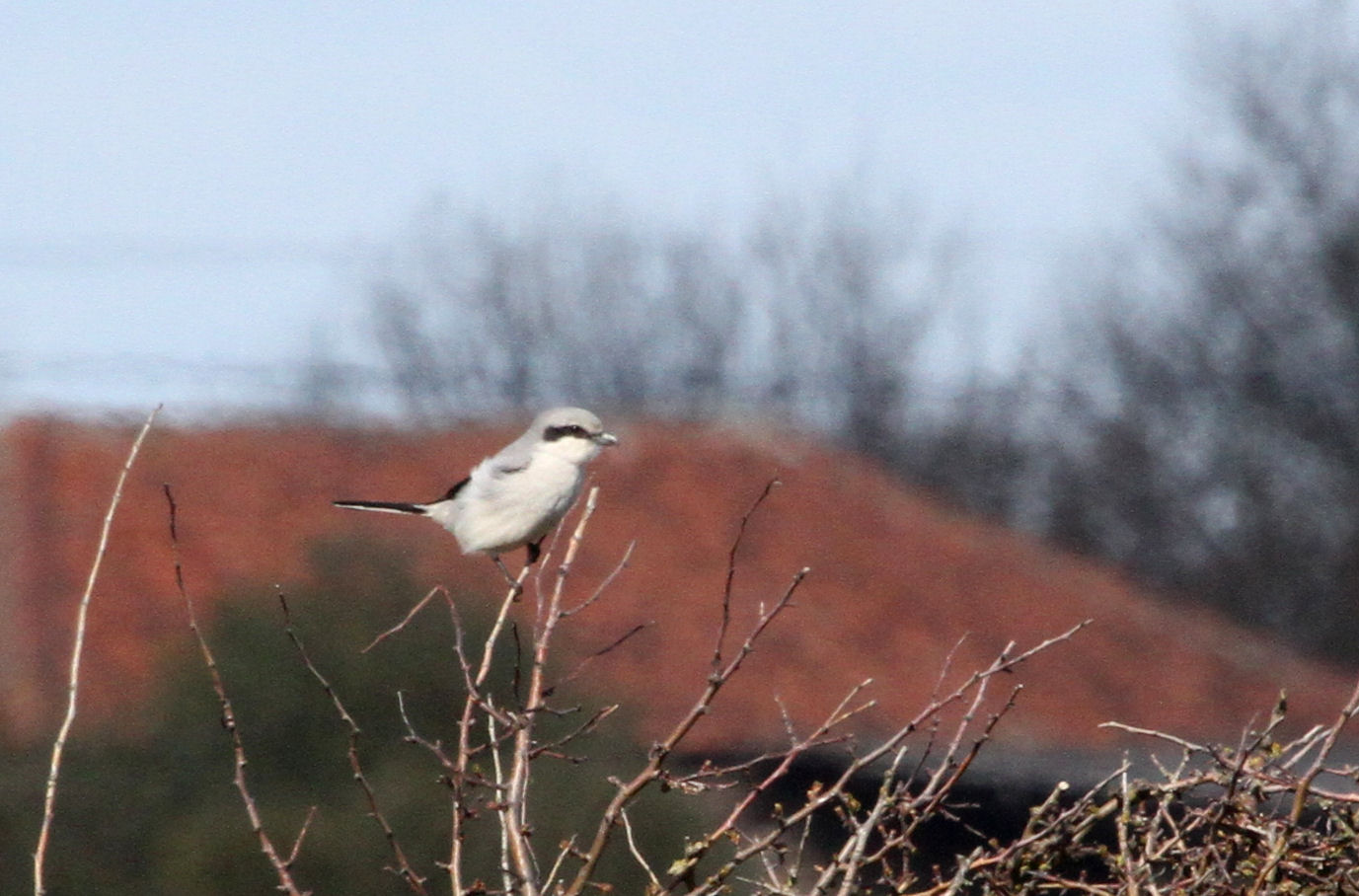
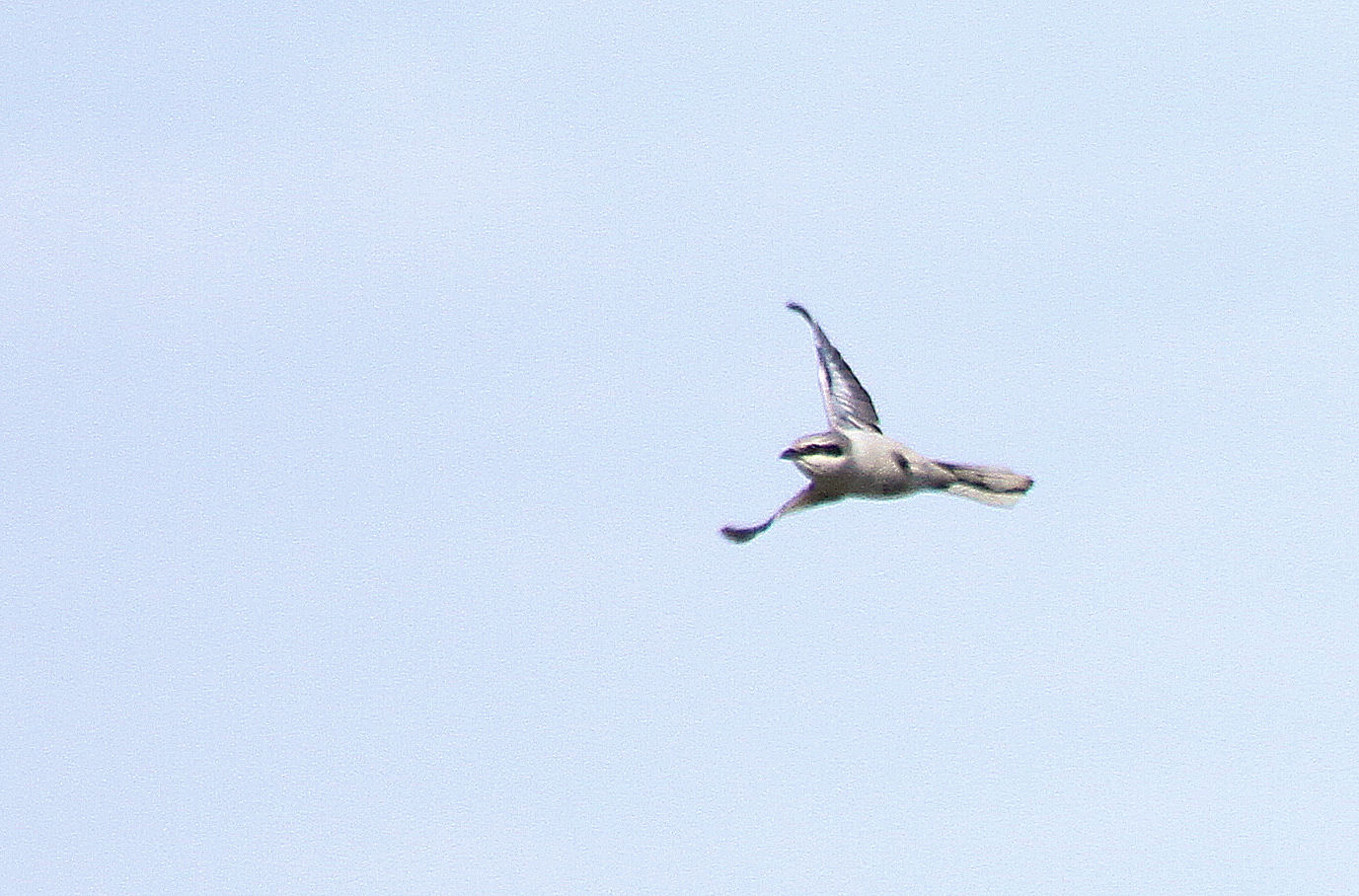
No one else was at Canal Scrape, and I looked for birds along the water's edge while Ben scanned the bushes with my binoculars. He soon said "There's a bird like a Shrike-thingey over there." Sure enough on snatching the binoculars I was able to confirm he had found a Great Grey Shrike. He had never seen one before. It was a long way off, but it was perched in the open before flying east to another bush. I gave it out on the radio, but a red light came on & the radio didn't appear to be working. I was about to try ringing one of the Spurn regulars when Barry Spence turned up. He had heard my message & replied, but I hadn't received his response. The Great Grey Shrike had appeared to relocate to behind Walker Butts & he went looking for it as Adam Hutt also scanned the area. It appeared to have moved on again. On a hunch I took Ben for a walk along the Canal & we were able to watch it for 20 minutes or so as it flew from bush to bush. It appeared quite flighty in the strong winds, and although we could see it well enough to identify it, we didn't get very close, which is why the pictures are only record shots.

Nevertheless, if I'd found a Great Grey Shrike at the age of 12, I'd be very pleased. I wonder how long Ben will remember this morning?

Great Grey Shrike
ditto
Great grey Shrike in flight
Great Grey Shrike being mobbed by a Reed Bunting
Merlin
Merlin
Merlin
Merlin
ditto