Thursday, 20 May 2010

Bog Standard Heron


After the excitement of yesterday's Purple Heron, today's birds were a lower key, symbolised by our standard Heron. However, the venue had to be altered at fairly short notice, when the road to the original site was undergoing major resurfacing. We went to somewhere of interest only 5 miles away, but the morning crowd had trouble leaving, whilst the afternoon session had problems arriving. There had been a fatality on the main road near the site, so it was closed to all through traffic. As the venue was in an out-of-the-way situation was was really surprised when the couple from Tadcaster and the 'student' from Leeds managed on arrive on time by using minor roads - expert map reading or the dreaded Sat Nav? It was a long walk to the main place of interest but on the way we saw 2 Pink-Footed Geese (am), 6 Lapwings, Reed Buntings, Linnets, Goldfinches, Mute Swans, Whitethroats, Sedge Warblers and we heard a couple of Reed Warblers. On the site itself we saw an Oystercatcher & its chick, a male Cuckoo, an unseasonal drake Wigeon and a pair of Goldeneye. There were at least 5 Great Crested Grebes, and plenty of Tufted Ducks, Grey Lag Geese (with 10 chicks), and all the usual suspects.
There 1st 2 pictures are of a Heron follwed by a male Cuckoo, and then a pair of Goldeneye. A Reed Bunting is followed by an Orange-Tip, a Wall Brown, and finally a Small Copper. Of the final picture I won't comment!

Wednesday, 19 May 2010

Purple Heron


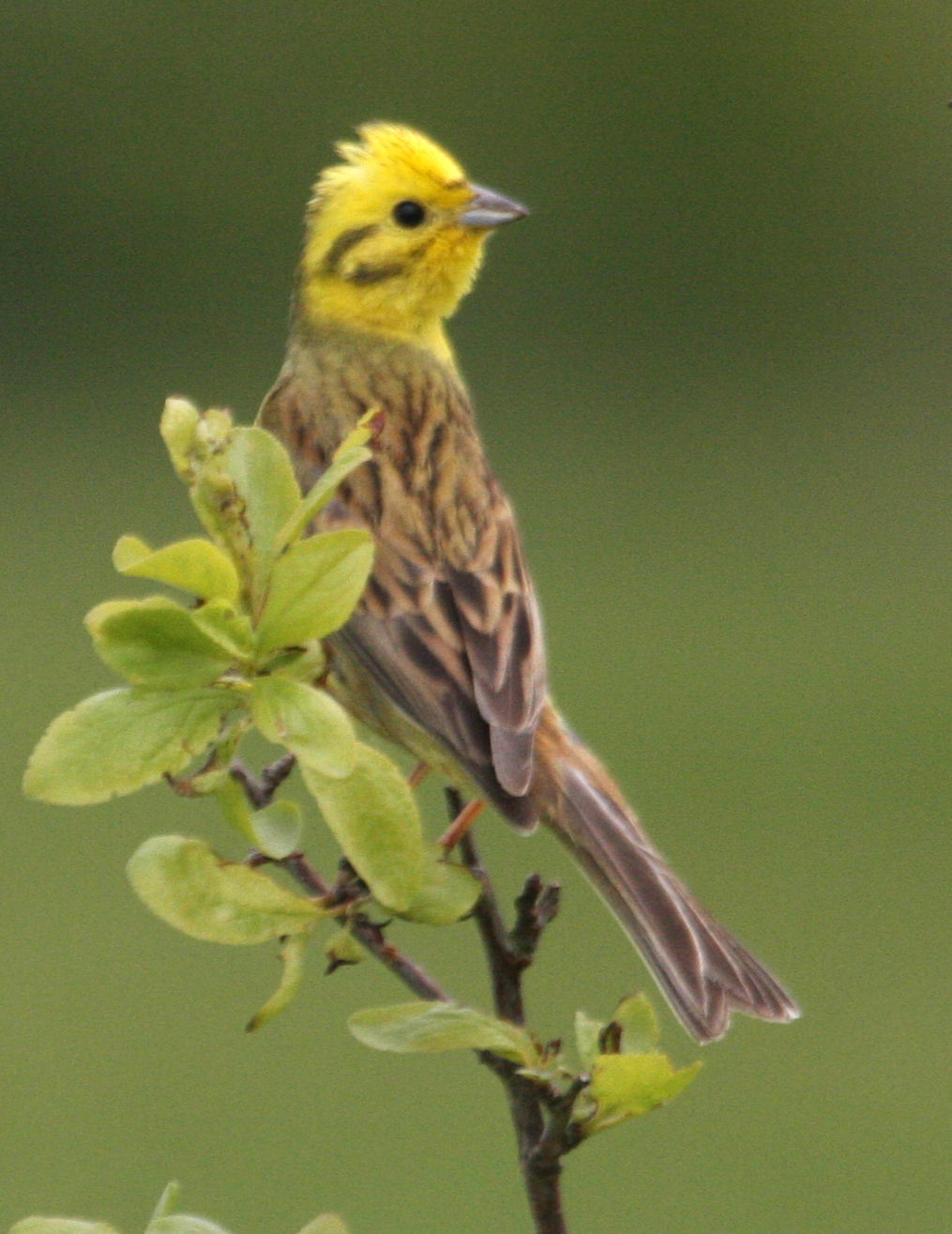
I was a bit doubtful about today’s planned trip going ahead, as a rarity turned up at the venue at the weekend, and I thought the area may be swamped with twitchers. I turned up early to have a recce, and saw a Turtle Dove and a Little Egret, but there was no one present, although Garry Taylor was arriving as I was nipping back to meet the am class. We returned half an hour later, as Garry was leaving, and he gave some clues as to where the Purple Heron favoured, although it had been flushed to some nearby pools. Down the lane we had excellent views of Yellowhammer, Whitethroat, Lesser Whitethroat, and Sedge Warbler with more fleeting glimpses of Skylark, Grey Partridge & Yellow Wagtail. We did spy the Purple Heron flying in the distance, and were able to see the rough location of its landing. I wasn’t entirely sure of the way & after a disastrous crossing of some uneven ground where blood was drawn we reached one of our objectives. Here, we had a Cuckoo, Reed Warblers, Reed Buntings, Marsh Harrier and could hear Grey Plover & Whimbrel. We did see the Purple Heron crouched from a distance where it resembled a Bittern, but we didn’t disturb it in the hope it would still be present for the pm session. On the return journey we saw 2 pairs of Wall Browns fighting, plus several Common Blues – many of them females.
The afternoon was much cloudier than the morning, so many songsters were under wraps, but we still saw Yellowhammer, and Lesser Whitethroat. Unbeknown to us, as we walked swiftly from one location to another & just before we walked down the final drain David S was thinking “this twitching lark is a load of rubbish”. He probably no longer thought this a few minutes later! We checked the drain and flushed the Purple Heron, which landed on the top of the bank ahead of us, where it tried to hide in the emerging Cow Parsley. Sue beckoned the office working twitcher, who’d been dogging our steps for some time & she set up her scope for everyone to enjoy views of the Heron. It showed well in a field before flying into Winestead Drain. From there it was flushed by a pair of West Yorkshire twitchers after which it flew high west, and seemed to follow the course of Winestead Drain towards the settlement of Patrington Haven. Carol wasn’t there to give her customary mark, so the others kindly said the excellent views of the Purple Heron (a ‘lifer’ for most people) was worth 17 out of 10!
The top 3 pics are all of the Purple Heron followed by a Yellowhammer, and then a Reed Bunting (c) 2010 Aileen Urquhart. Then there is a Grey Partridge, a Sedge Warbler, a Lesser Whitethroat & some female Common Blues.

Tuesday, 18 May 2010

L.B.J.s


We went a little further afield than we normally do to today's location, which paid off in some ways. We didn't really see any spectacularly colourful birds, which is why I've entitled this post LBJs. For those not in the know, LBJs is an all-encompassing term used by some birders to describe the less colourful, small dull birds, or 'Little Brown Jobs', as they are more commonly known. However, these LBJs all have a redeeming feature. The Spotted Flycatcher is full of character - it has a wonderful erratic aerial flight as it sallies forth after an insect, and often returns to a favourite perch after doing so. The Woodlark has a marvellously mellifluous song, plus some attractive distinguishing plumage features: the pale supercilium over each eye, which meet at the back of the head, the pale marks along the edge of the wing, and the very short tail. The Garden Warbler, of which there were many today, has a rich bubbling song, but has very few distinguishing plumage features, but its large eye in its pale face lends it an 'air of kindness' not seen on most other Warblers. 2 years ago there were at least 6 singing Tree Pipits at this location, but there were no sign of any today, and there were no Hobbies, and the only Cuckoo heard was very distant. Reptiles also let us down, with no Adders, Grass Snakes or Common Lizards seen. We did see a couple of Treecreepers and saw 2 of the 3 species of Woodpecker present at this location. The Woodlark and even the Spotted Flycatcher were new birds for some on the course, and the venue itself was one which some had never previously visited before. Although the quantity of birds won't break any Guinness World Records, it was a site most people were keen to revisit.
The above pictures are: 2 of the Spotted Flycatchers, 2 record shots of the Woodlark, and one of a Garden Warbler. Of the 2 Willow Warblers, the one bathing is (c) 2010 Claude Hargreaves, as is the Roe Deer. There follows a Great Tit at its natural nest-hole, followed by a Pied Wagtail, then a Brimstone butterfly, a Large Red Damselfly, rounded off by a Hoof Fungus, which has been said to be found in only 1 woodland outside of Scotland, but seems to be present in many of our local birch woodlands.

Monday, 17 May 2010

Turning Business into Pleasure


I’d already arranged to meet someone for an unfinished business meeting at Tophill Low today, when news came that a Purple Heron had been seen on site over the weekend. I turned up 2 hours early & after an extremely close encounter with a Mistle Thrush I went to North Marsh, but there was no sign of that bird, or of the Kingfishers. Only some flirtatious Pochard, plus Reed Warblers, Reed Buntings and a dozing Mute Swan disturbed the silence. After the meeting I travelled round the Southern part of the site, and marvelled at the new interpretation boards, which contained some of my ‘student’s’ photographs. There were also a couple of new comfortable-looking benches which had been installed since my last visit. It was a very peaceful morning, as all the reserve visitors seemed to be congregating on North Marsh on the look-out for the elusive Purple Heron. I spent most of my time in one of the back-to-back hides overlooking SMW. There was one particular hawthorn bush, which over the course of an hour contained a singing Garden Warbler, a singing Sedge Warbler, a female Blackcap, a singing Willow Warbler, and a silent Lesser Whitethroat, which had a go at sunbathing until another small bird disturbed it. It seems to be a good year for Garden Warblers with good numbers of the birds all over the reserve. I could hear 2 different Turtle Doves purring from the deep cover of South Scrub, but I couldn’t spot them. On the way back I had a sunbathing Song Thrush, and what sounded like a whole family of Long-tailed Tits in the hedge not far from the visitor centre, but few new species. Tophill Low is great at this time of year once the weekend is over if you just want to commune with nature in peace and quiet for a while.
Blogger is still malfunctioning for me, so pictures are from top: 2 pics of Lesser Whitethroat, followed by 2 of Sedge Warbler, and then 2 of Mistle Thrush, which should be compared & contrasted with the following sunbathing Song Thrush. There are then 2 studies of the North Marsh Barn Owl followed by Pochard, Tufted Duck, a pair of Canada Geese and their goslings, an insect (Caddisfly?); and finally a female Pheasant.

Saturday, 15 May 2010

Kelsey Gardens, Burstwick


Blogger seems to be misbehaving at the moment, so the top 2 pics are of a Whitethroat, followed by 2 of the Blackcap, and one of the Meadow Pipit. The back end of a Cuckoo is next and the final photo is of a Willow Warbler

Today’s session was not one of my standard classes, but was one organised by the landowner to allow visitors to observe the spring birds around Kelsey Gardens. 8 people arrived for the start time of 10am. 4 people were Kelsey Garden regulars, whilst the remaining 4 were either my ‘students’ or accompanied my ‘students’ for their first visit to this venue.

We commenced by peering through what at first glance was the unprepossessing barbed wire of the adjacent Sangwins yard. Here, we had amazing views of a Whitethroat, briefer views of a Linnet, and an even shorter view of a Stock Dove. We walked down to the first lake where we were serenaded by a Blackcap. The lake was ringed with anglers, but we saw Mallard, and Coot here. In a bush in the grassy field to our left we had good views of a Meadow Pipit, which later delighted the crowd with its parachuting song flight. After passing the lake we reached an area of reeds where we heard the monotonous rhythmic song of a Reed Warbler, and Kelsey Garden regular, Mike, was able to get his first glimpse of one. Climbing the adjacent slope we heard a Willow Warbler, but the Turtle Doves were silent. The birds were fairly quiet at the top of the hill, but we could hear another Blackcap & a Goldfinch tinkled as it flew overhead. Unsurprisingly, last year’s passing Osprey failed to appear!

Retracing our steps we arrived at ‘The Path of Brian’ where everyone got good views of 3 male Reed Buntings, and heard the songs of a couple more Reed Warblers, but the Sedge Warblers and the Lesser Whitethroat seemed to be absent this year. However, the highlight here, and the star bird of the morning, was a bubbling female Cuckoo, which flew quite close to us a couple of times before it was joined by a male. Later, they flew right over our heads as we climbed the hill between the 2 lakes. We were able to see the nest-hole of the Kingfisher, but it remained out of sight as canoeing was taking place on South Lake. Similarly, we glimpsed a Great Crested Grebe, but it hid itself among the reeds as soon as the first canoe set out. However, one participant was able to see her first Tufted Duck at the back of this lake. Along this hill we continued to hear a Cuckoo, and then saw our first Willow Warbler of the morning. The nearby drain yielded a concealed Sedge Warbler and a flagrant yellowhammer on the wires, but along the old railway line we failed to hear the usual Lesser Whitethroat or Turtle Dove. However, I was relieved to hear that Mike had heard the ever-decreasing Turtle Dove much earlier that same morning. In all we saw or heard 37 species, which isn’t bad going, but several expected birds were missing during our trip, so on a weekday when there should be less activity on the lakes one may expect to encounter around 40 different species. We headed back to the refreshment tent for a welcome drink & a snack. Overall, everyone was very pleased with their trip around Kelsey Gardens.