Tuesday, 10 April 2012

This Term's Butterflies

In the Spring term starting next week we will also spend time identifying any butterflies we encounter. Compared with birds there are only a relatively small number of species we may see, and there are very few confusion species. The most likely one to cause confusion is the Brown Argus which can look remarkably like some female Common Blues, however the former is so rare we probably won't see one. The first hibernating butterflies have already been seen: Comma, Peacock, Small Tortoiseshell and the special butterfly at this time of year, the Brimstone, and amazingly the first Holly Blues have been spotted already, but Orange Tips should be emerging, and later they should be succeeded by some of the summer species such as Gatekeeper, Small & Large Skippers, Meadow Brown, and Ringlet. We will be going to some special locations to see the localised Marbled White, which only occurs in large numbers at selected sites. It will be interesting to see how relatively recent colonists such as: the Gatekeeper, Comma and Speckled Wood fare after another harsh winter. Hopefully, the warmer spring weather will bring out many butterflies for the classes to enjoy. In the past I've tended to find people don't know much about butterflies before they start the classes, but as they discover more about them & as they see extra species as the summer progresses, then they become more proficient at identifying each butterfly they see - seems to be a lot easier than what some people call the little brown jobs - warblers!

Common Blue [male]
Marbled White
Small Copper
Wall Brown
Peacock
Small Tortoiseshell
Comma
Ringlet

Monday, 9 April 2012

Not Forgetting...

Here in East Yorkshire we tend to take our sea birds for granted, forgetting how hard it is to see these birds on the rest of mainland England or Europe. Towards the end of the Spring course, we will be going to see Puffins, Guillemots, Razorbills, Gannets, Fulmars, and Shags when many hedgerow birds are hiding away as they moult. Experience of visiting these birds during the past 7 years has resulted in discovering the single best place to obtain a photo of these charismatic clowns. We will revisit this location during our trip to the coast.

Puffins
Billing & Grumbling
A Clownish Expression
Sitting Down on the Job
Gannet
Rock Pipit
Foul Mouths

Sunday, 8 April 2012

Best of the Rest

Louise from Bubwith reports a Cuckoo calling today for the 2nd morning running. That makes the arrival date exactly the same as for 2011 & 2010!

During the course we will be going to a few locations where you may still find Cuckoos, and as well as hearing them we will spend time tracking them down, so everyone also sees one too

Cuckoo
Unfortunately, numbers of Kingfishers have dropped after 3 winters with very cold snaps. However, we will make every effort to get decent views of these tiny, but stunning birds.

Kingfisher
Yellow Wagtails are a local speciality of the Holderness area, and there are a couple of venues where we have every chance of watching them. They may not be as well-known as Kingfishers, but they are as colourful in their own way, and course participants will enjoy encountering this species.
Yellow Wagtail
Like all the species mentioned so far, Turtle Doves have been declining for several years, but there are a few places we can go to catch a view of this attractive summer visitor

Turtle Dove
Marsh Tits are resident birds, but they are also in decline. We will be visiting a couple of woodland sites where we can still encounter them. When we do so, we will look at the features, which distinguish them from their close relative...

Marsh Tit
...the Willow Tit. In fact there is at least one woodland venue, where they still exist almost side-by-side. The Willow Tit has probably declined even more steeply than the Marsh Tit, but hopefully we will see both of these perky species.

Willow Tit
The East Riding still holds decent populations of Yellowhammers, and we listen to their "A -Little-Bit-of-Bread-&-No-Cheese", but also see these stunning birds in their hedgerow haunts.

Yellowhammer
Another farmland bird of the hedgerows is the cheerful Linnet. Sometimes they can be very colourful, and we should get views like the one below of this popular songster.

Linnet
Finally, on our trips to the seaside we will look for special birds, such as Little Terns.

If you would like to see most of the birds on this post, there are still spaces available on Tuesday & Friday afternoons!
Little Tern

Thursday, 5 April 2012

Ben's Best Find

I set off this morning in the hope of seeing & photographing the 2 Black Redstarts at the tip of Spurn. Ben didn't want to spend the morning shopping with his Grandma, so he came along too. Unfortunately, when we arrived the road was closed. We parked up at the Warren & walked as far as the Autumn breach. The road was under quite a lot of sand & there were some very large stones & very few birds of interest. The best bird we saw was a Merlin, which flew along the estuary & landed for a couple of minutes on the saltmarsh before setting off south again. We didn't have time to walk all the way to the point, so we walked back & then drove to Canal Scrape.

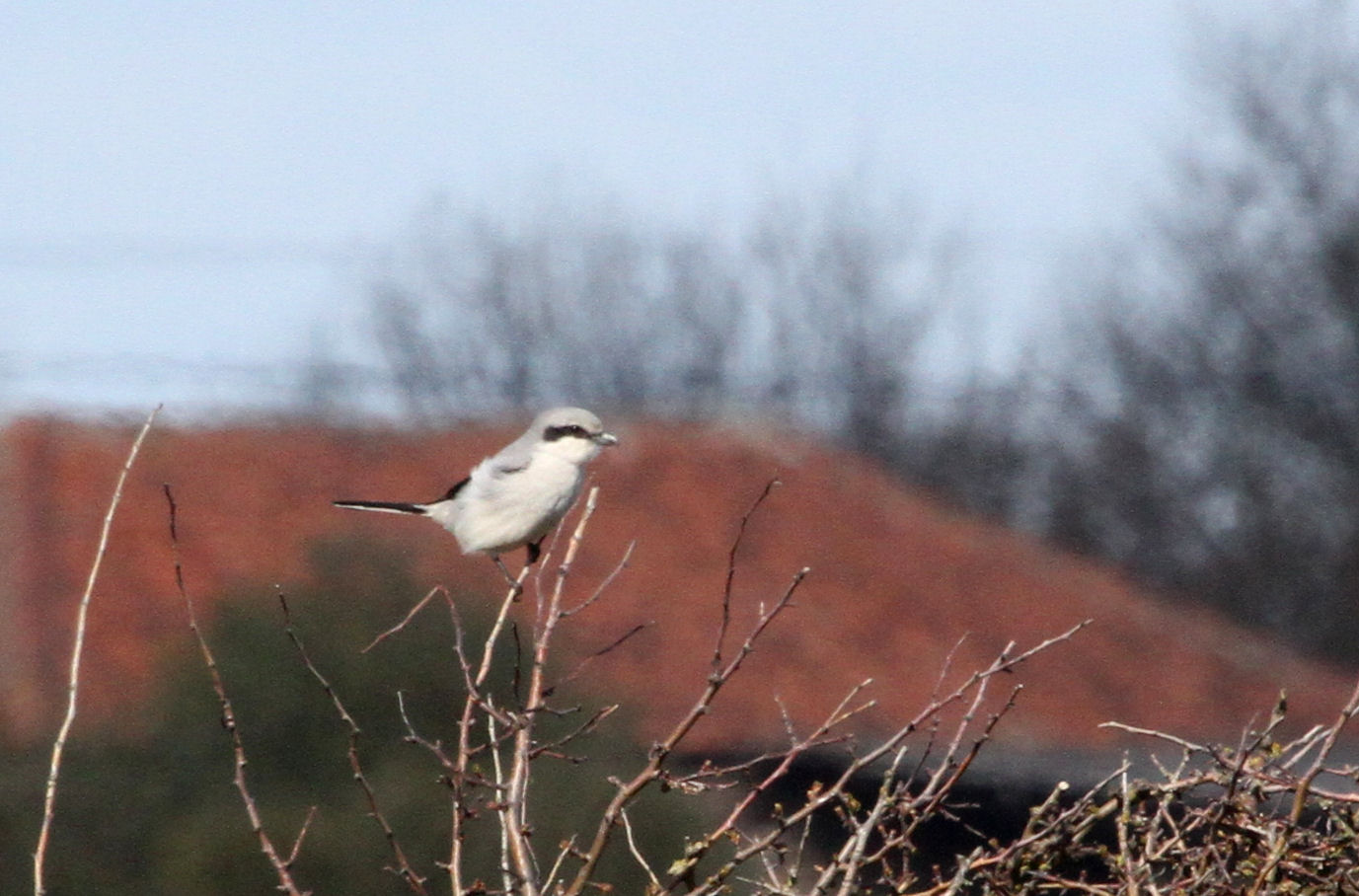
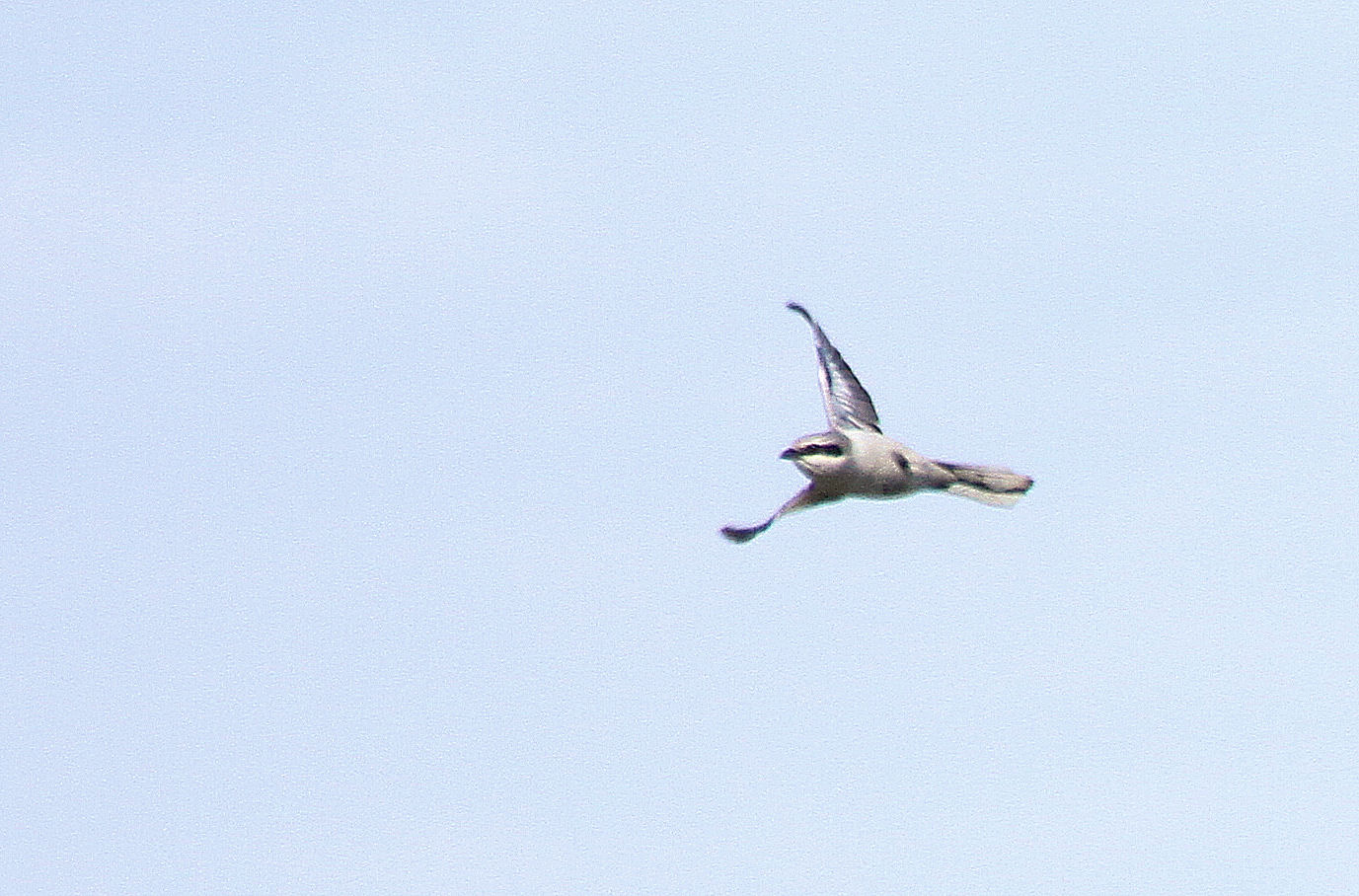
No one else was at Canal Scrape, and I looked for birds along the water's edge while Ben scanned the bushes with my binoculars. He soon said "There's a bird like a Shrike-thingey over there." Sure enough on snatching the binoculars I was able to confirm he had found a Great Grey Shrike. He had never seen one before. It was a long way off, but it was perched in the open before flying east to another bush. I gave it out on the radio, but a red light came on & the radio didn't appear to be working. I was about to try ringing one of the Spurn regulars when Barry Spence turned up. He had heard my message & replied, but I hadn't received his response. The Great Grey Shrike had appeared to relocate to behind Walker Butts & he went looking for it as Adam Hutt also scanned the area. It appeared to have moved on again. On a hunch I took Ben for a walk along the Canal & we were able to watch it for 20 minutes or so as it flew from bush to bush. It appeared quite flighty in the strong winds, and although we could see it well enough to identify it, we didn't get very close, which is why the pictures are only record shots.

Nevertheless, if I'd found a Great Grey Shrike at the age of 12, I'd be very pleased. I wonder how long Ben will remember this morning?

Great Grey Shrike
ditto
Great grey Shrike in flight
Great Grey Shrike being mobbed by a Reed Bunting
Merlin
Merlin
Merlin
Merlin
ditto

Wednesday, 4 April 2012

Summer Raptors Rapture

In the spring/summer term we should come across several bird of prey species.

A bird which has increased noticeably in the last few years, and which has proved extremely popular with the classes is the diminutive fast-flying Hobby. We will probably observe this dashing summer visitor having a snack on the wing - may be a dragonfly, but possibly even a Swallow or a Martin! We will be going to several locations where an encounter with this species is a real possibility & if we're lucky we will get almost a good a view, as in the the picture below!

Hobby (c) 2012 Mick & Kath Sharpe - a dashing favourite
Hobby (c) 2012 - Fast food consumption - food on the go!
There are a couple of venues along the Humber where we are guaranteed views of this impressive, large, slow-flying species. In some parts of Yorkshire they are still a relatively scarcely seen bird, but on the Humber we now almost take them for granted. If we are lucky we may seem them skydancing, although we may have already missed this spectacle this year!

Young Marsh Harrier (c) 2012 Chris Cox
Marsh Harrier in flight - easy to see along the Humber
Like the Hobby, the Honey Buzzard is a summer visitor, but this is much more difficult to come across in a casual way. We are therefore visiting a raptor viewpoint, where we may have a chance of watching them display. Their predilection for nests of wasps and bees is unique among British raptors, and they are beautifully marked, as the picture below illustrates.

Honey Buzzard (c) 2012 Vince Cowell - going on a special trip to try & see them
Yet another summer visitor is the Osprey, and like the Hobby its numbers have been rising in the past few years. 3 classes have now seen an Osprey during the duration of the course, so now I just have to ensure that it is spotted by the Tuesday, Thursday and Wednesday pm sessions.
Osprey [silhouette] - keep your eyes to the skies
The birds of prey I've mentioned so far, which have been increasing, have done so by natural means aided by specific programmes to improve habitat and possible breeding sites. However, the Red Kite is a resident bird of prey, which increased because of a pro-active intervention by humans: a reintroduction programme. Although the nearest scheme was nearly 50 miles away, the Red Kite has become a welcome addition to the fauna of the wolds, and which we may even observe floating above our car park.

Red Kite - may drift over our car park
Although the Buzzard isn't yet as numerous here, as it is in other parts of the UK, we now may encounter it in the bleakest, most flat areas of our county, as well as over woodland, and the more hilly districts which are more typical of this species.

Buzzard - becoming a more common sight
The Peregrine has also increased in recent years, and we've already enjoyed it plunging vertically at nearly 100 miles an hour, just the other week. This is a bird we are most likely to observe at some coastal sites.

Peregrine (c) 2012 Vince Cowell - may spot one on the coast
The Kestrel is still the bird of prey we are likely to see most often, and there is a good chance we will see one virtually every week

Kestrel - will probably be observed most weeks
The Sparrowhawk is supposed to be more numerous than the Kestrel these days, but because of its more secretive habits we may just catch a quick view as it hunts for its prey along a hedgerow. If we are a little luckier we may find a pair involved in their display flight, or we may see one with its prey, as this bird plucking a Starling!

If you are interested in seeing some or all of the raptors featured on this post, then there is still time to secure a place on the Tuesday afternoon course starting on April 17th, but time is running out!

Sparrowhawk - will get a glimpse most weeks & some weeks a decent view

Monday, 2 April 2012

Time for a Chat

One of the most attractive families of birds we may encounter this coming term are the Chats.

Apart from the Kingfisher, the Redstart must be one of the most colourful of the UK's breeding birds. We will be visiting a location where we may hear them singing & hopefully we will spot one feeding its youngsters.

We aren't going to a specific site to see a Wheatear, but they are so widespread on migration, we should be able to observe at least one at some of the sites we are visiting.

In contrast, we are going on one specially organised event to listen to the astounding song of the Nightingale. The timing of our trip has been designed so that we should also be able to see this elusive species.

30 years ago we would have commune across a Whinchat at one of the sites we will be visiting near Market Weighton, but this species has declined drastically, and no longer breeds in East Yorkshire. We are therefore making a special long-distance trip once the main classes have concluded to try & find this stunning bird on its moorland breeding grounds.

Similarly, we may see the Stonechat at a moorland site, but we may also connect with one on migration at a coastal site towards the end of the course.

We are probably be going to be too late to find a Black Redstart, but if one is around when we are on the coast we will try & find it.

The Bluethroat is a bird which has eluded the sessions so far, but we can dream!

Finally, there is one Chat which we won't make any special efforts to see, but which we won't be able to avoid!

Redstart - a thinly distributed breeding bird in East Yorkshire
Wheatear - always a popular bird to find on migration
Nightingale - not the most colourful member of the family, but a memorable bird to encounter
Whinchat - a special trip into North Yorkshire should track these beauties down
Stonechat - a coastal visit is most likely to result in this little character
Black redstart - again most likely to be found on the coast, but scarcer than a Stonechat
Bluethroat (c) 2012 Mick & Kath Sharpe - only a dream bird so far!
Robin - common as muck!