Tuesday, 23 July 2013

Prince of Whales

Last week saw an unprecedented event off the Yorkshire coast - the presence of at least 9 Minke Whales and a Sei Whale to the north of Filey Brigg.  They seemed to have been attracted by a very generous food source - perhaps an abundance of Sand eels.  Unfortunately, I was booked to go away, so I missed them.  When I belatedly went looking for them yesterday they hadn't been spotted for a couple of days.  However, Tuesday am stalwart David Tasker went for them on the best day, last Friday, and managed these pictures of a whale surfacing and scattering some Auks.

Also included are David's photos of a Black-throated Diver he was lucky enough to photograph on a recent trip to Scotland.

All photos (c) 2013 David Tasker
Minke Whale
 ditto
 Black-throated Diver
 Ditto

Sunday, 14 July 2013

Kiplingcotes Heatwave

On a bright and sunny Saturday we decided to test out my nephew's new camera he bought with his birthday money. We plumped for visiting Kiplingcotes Chalk Pit, which is sometimes at its best at this time of year. We arrived at 9.45, and it was already hot and the butterflies were very active. It is sometimes better to visit such venues on warm but cloudy mornings, as the butterflies are likely to be less active and be static on vegetation for longer. We had to manage the best as we could in the extreme heat.
Marbled White on Greater Knapweed

 Meadow Cranesbill   (Canon 100-400 lens)
 Meadow Cranesbill [Nikon Bridge Camera] (c) 2013 Ben Coneyworth
Fairy Flax [Nikon Bridge Camera] (c) 2013 Ben Coneyworth
Ragwort [Nikon Bridge Camera]  (c) 2013 Ben Coneyworth
 Marbled White on Scabious
 Marbled Whites
 Ditto
 Marbled White & Burnet Moth
 Marbled White on Thistle
 Marbled White on Greater Knapweed
  Marbled White on Greater Knapweed [Nikon Bridge Camera] (c) 2013 Ben Coneyworth
 Marbled White on Ragwort [Nikon Bridge Camera] (c) 2013 Ben Coneyworth
Our first Marbled White was seen before we left the roadside, and on entering the reserve we saw one after another. In all we think well over 150 were on the wing. The floral display was also impressive with Meadow Cranesbill as soon as we entered, plus Birdsfoot Trefoil, Bladder Campion, Thyme, and Hawkbits. There were also plenty of Ringlets, fewer Meadow Browns, and even fewer Common Blues, Small Heaths, and Large Skippers. We climbed the top of the hill and began to see a few Burnet Moths, and several Pyramidal Orchids, and an even stronger concentration of Marbled Whites. A beautiful smelling herb was encountered along the skyline, where there was also many thistles and Greater Knapweed. 
Meadow Brown
 Ringlet
 Record Shot of Female Common Blue
Goatsbeard [Nikon Bridge Camera]  (c) 2013 Ben Coneyworth
 Same Goatsbeard [Canon 100-400]
 Robin's Pin-Cushion (c) 2013 Ben Coneyworth
 Rosebay Willowherb [Nikon Bridge Camera] (c) 2013 Ben Coneyworth
 Rosebay Willowherb [Canon 100-400]
 A walk along the bottom of the pit didn't add many new species, apart from several Twayblade spikes.  However, it was rather pleasant in the shade, and it was here we saw our first Rosebay Willowherbs. There weren't many birds about, but Yellowhammers could be heard making their chipping contact calls, and we were scolded on occasion by concealed Whitethroats. 
Common Twayblade [Nikon Bridge Camera] (c) 2013 Ben Coneyworth
 Common Twayblade [Canon 100-400]
 [Nikon Bridge Camera] (c) 2013 Ben Coneyworth
 Swifts over Poppy Field
 Poppy Field [Nikon Bridge Camera] (c) 2013 Ben Coneyworth
 Poppies & a Swift [Nikon Bridge Camera] (c) 2013 Ben Coneyworth
 Goatsbeard
 Goatsbeard aka Jack-go-to-bed-at-Noon
 Goatsbeard from above 

We then drove towards South Dalton where we discovered a bright Poppy field. Although there were fewer Poppies than in the fields around Brockadale, the ones at South Dalton weren't ruined by the intrusion of pylons. There were several Swifts swirling above the Poppies, and it must have been the wild flowers which were attracting the Swifts, because there were none feeding over the adjacent fields which didn't have any Poppies.  On the return journey was a Goatsbeard seed head in almost perfect condition.  This was actually accompanied by one of the closed flowers, which has earned it the other name of Jack-go-to-bed-at-Noon.  

Friday, 12 July 2013

Spurn Lighthouse Visit

Yesterday just over a score of participants met at Spurn to be shown round Spurn Lighthouse.  Maggie and Claire arrived early to enjoy the antics of the Swallows feeding their brood at Canal Scrape.  The rest of us rendezvoused at the Blue Bell, and then car shared to the point car park.  From there we walked to the lighthouse.  Along the way we noticed the profusion of wild flowers, and the amazingly pleasant scent of the Wall Rocket.  In the afternoon we were nearly mown down by someone who didn't want to slow down & screamed at us that pedestrians should not walk along the road at all!
Swallow (c) 2013 Maggie Bruce
Panoranic View (c) 2013 Maggie Bruce
 View to the South
 View to the North
 The 2nd of Spurn's 3 Lighthouses in modern times
At the lighthouse we were met by Adam Stoyle, Yorkshire Wildlife Trust's Admission Officer for Spurn.  I handed over to him, and he began by informing everyone of when the lighthouse was constructed, and of some of the YWT's ambitious plans for the future.  The acoustics were rather echoey, so it made sense to concentrate on every word being said.  Adam proceeded to inform us of how each room was used when the lighthouse was in operation, and what some of the remaining features were used for.
 An Art Installation (c) 2013 Maggie Bruce
Evenually, we made it up the 140+ steps to the very top where the main light had been installed.  Here we had breathtaking panoramic views over the Humber estuary towards Grimsby; plus the amazing curving sweep of the peninsula itself.   From here Adam was able to point out many features of the area, which cannot all be seen from any other point.  He was able to regale the audience with all their names, and their history.  In all he kept everyone spellbound for over an hour, and was easily able to deal with any questions from the gathered throng.   
Dunlin (c) 2013 Maggie Bruce
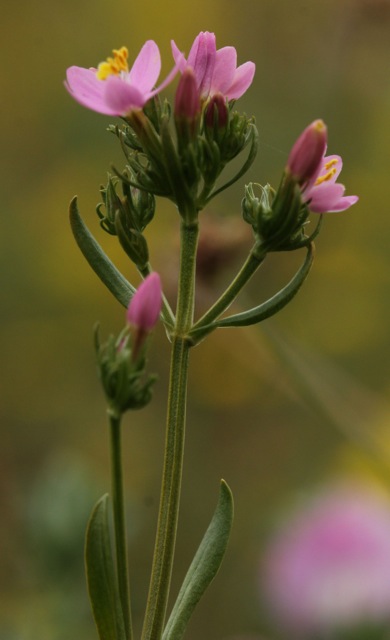
Once Adam's talk had finished and everyone's appreciation passed on to him, the participants went for a floral and insect walk around the point.   Normally, we would have gone looking for birds, but mid-July is a fairly quiet time for those.  However, the flowers rewarded our attention.  This year the Parade Ground area was absolutely awash with colour, with some of the highlights being Pyramidal Orchids, Restharrow, Lady's Bedstraw, Centaury, Scarlet Pimpernel, Storksbill and  Viper's Bugloss.  Unfortunately, the sun remained obscured by clouds all day, so there weren't a profusion of insects but we did see quite a few Burnet-moths, plus Small Heaths, Meadow Browns and Ringlets.   
Swallow with at least 2 Damselflies (c) 2013 Maggie Bruce
 Swallow (c) 2013 Maggie Bruce
 Immature Magpie
 Burnet-Moth on Pyramidal Orchid
 Burnet-Moth (c) 2013 Maggie Bruce
 Pyramidal Orchids (c) 2013 Maggie Bruce
 Pyramidal Orchid
 Record Shot of Ringlet
 Small Heath on Yarrow
 Storksbill (c) 2013 Maggie Bruce
 Grasshopper sp. (c) 2013 Maggie Bruce
 Restharrow (c) 2013 Maggie Bruce
 Lady's Bedstraw (c) 2013 Maggie Bruce
 Lady's Bedstraw
 Centaury (c) 2013 Maggie Bruce
 Dog Rose (c) 2013 Maggie Bruce
 Hawkbit sp. (c) 2013 Maggie Bruce
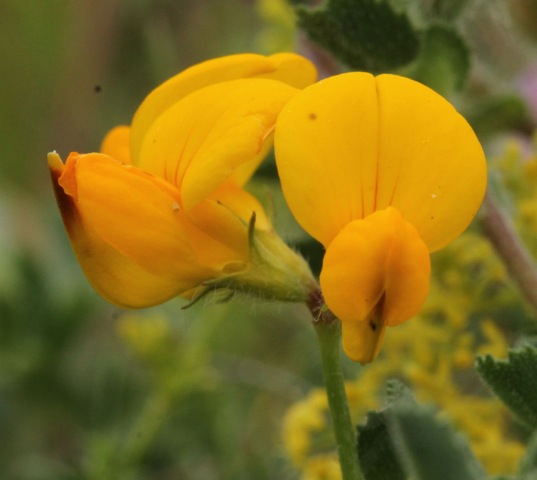
 Pea sp. (c) 2013 Maggie Bruce
 Viper's Bugloss
 Snow-in-Summer (a garden escape)
Some photographers remained in the area once their session had finished, and this is when Maggie obtained her photograph of the Dunlin.  In all our visit ensured that £88 was raised for the Yorkshire Wildlife Trust, while everyone had an enjoyable and informative visit to the lighthouse, and our thanks go out to Adam Stoyle and YWT for a very pleasant visit.