Thursday, 10 May 2012

The One That Got Away

Thursday was a rerun of Tuesday, but the songbirds were a lot quieter, especially in the very strong afternoon winds.  Despite this the morning started well with Yellow Wagtail on the journey and a Short-eared Owl shortly after leaving the cars.  We saw & heard mainly the same species on Tuesday, with the Grasshopper Warbler again providing one of the highlights.  It was a very hard bird to photograph.  However, a new bird in was a Garden Warbler.  This sang beautifully several times, but was even harder to see than the Grasshopper Warbler!  In the afternoon these were both ones that got away, as we could no longer hear or see either of these birds.
It had rained hard in the night and the dykes, ditches and streams were much muddier, so there was no sign of the Kingfisher – it was one which got away.  A male Linnet was one of the final birds at the site in the morning, and on the return journey 2 male Yellow Wagtails proved highly popular.  It was just a shame that the Common Sandpiper had moved on – another one that got away.
One of the first things we saw in the morning was a Wren’s nest, which was directly in the centre of the road leading to a pumping station.  Conversely, one of the last things the pm group saw was a quite different nest left abandoned in the centre of an Otter-path.  There can be little doubt that both these nests had been predated.  Any ideas of what species made the second nest would be gratefully received.
An addition in the afternoon was a Cuckoo singing from a plantation of Poplars.  It flew over the shooting estate, but half an hour later it returned to its earlier position. Towards the end of the afternoon session my phone rang.  I thought it was going to be another company wanting to sell me a mobile phone, and I was prepared to hang up, but was relieved to discover it was the reserve warden, asking if I’d seen the Red Kite.  We had failed to pick it up as it was directly behind us.  Everyone swung round & were able to see a Kite as it flew in a Westerly direction, struggling against the strong southerly wind.  Apparently, this was the second of a pair.  Although the first one got away, we were lucky enough to latch on to the 2nd bird.  There is no doubt without the reserve warden’s call one of the highlights of the late afternoon would have been missed.  

Yellow Wagtail (c) 2012 Richard Whateley
 Yellow Wagtail
 Short-eared Owl (c) 2012 Richard Whateley
 Short-eared Owl (c) 2012 Richard Whateley
 Mute Swans (incl V636)
 Avocet (c) 2012 Richard Whateley
 Common Tern (c) 2012 Richard Whateley
 Sedge Warbler (c) 2012 Richard Whateley
 Grasshopper Warbler
 ditto
 Linnet (c) 2012 Richard Whateley
 Mistle Thrush (c) 2012 Richard Whateley
 Wren's Nest
 Nest
 Goslings
[Above] A Grasshopper Warbler, perfectly framed - just a shame the camera focussed on the twigs!

Wednesday, 9 May 2012

White Triangle Bird

The weather forecast last night indicated that rain would move slowly up the  country.  In an attempt to avoid the rain the venue was changed to as far north as we could go & still be in East Yorkshire – we may have actually just strayed into North Yorkshire.  
A Yellowhammer and Linnets were first heard & then seen from the car park.  We walked down a valley, which had been cleared of many of its scrubby bushes, so the Willow Warblers have vacated this area.  However, the am group did watch a male Whitethroat dancing around a female - a performance I hadn't witnessed before.
We plunged further down to the valley’s bottom, and despite the lack of conifers we heard and then saw a couple of Goldcrests.  Next we passed through a gate towards a scheduled ancient monument and searched the old ash trees and bushes for the Redstart Tony Robinson saw at the weekend.  A female had turned up since then, so the birds were a while before they showed, and they weren’t as confiding for us, as Tony's male had been briefly for him on Saturday.  Everyone was able to obtain a view, but they were much harder to see in the afternoon.  Despite Doug’s best efforts at finding the male Redstart it disappeared again before everyone had seen it.
25 years ago shortly after passing my driving test I took my mum to today’s location.  While I was recording some birdsong my mum spotted something she hadn’t seen before.  “A strange bird just flew past, with a white triangle on its head!”  A few questions later & it seemed she’d seen a Redstart in an area where they weren’t generally supposed to be.  However, further searching has revealed that there is a small but stable population on the Yorkshire Wolds.  They seem to arrive a little earlier in the valleys with streams, pools and other running water, but they are also present a few days later in the completely dry valleys.  I’m not sure if any survey work has been undertaken to determine just how many Redstarts breed on the Yorkshire Wolds.  This population is much further East than is generally acknowledged in references to the distribution of this species in the UK.
We went back to an old railway line and saw Marsh Tits attacking the buds of an Ash tree, but there weren’t as many hedgerow birds as usual.  This could be because the summer migrants still haven’t all arrived, but could be because their favourite hedge had been severely hacked back.  We reached the village and saw a soaring Kestrel, which a couple of ‘stringers’ tried to boost into a Sparrowhawk, but they hadn’t noticed the dark border to the tail.  Of course when it flew off normally it resumed its standard Kestrel shape.  As we approached the village sightings of Swallows, Pied Wagtails and Greenfinches increased, and in the village itself House Martins and Tree Sparrows proliferated.  We also saw a male Bullfinch here and heard the beautiful song of a Garden Warbler, which was glimpsed briefly by the am group.
We returned the way we had come, but the killer hill proved rather unpopular with some participants, so 2 set back up there early, so they could take their own time, whilst an am participant waited in the village for someone to collect her by car.  The wild flowers weren't bad today & a couple of Orange Tip butterflies were seen.
During the morning session a formation of 20 planes flew North-West with another plane leading them.  We have no idea what these planes were doing in this remote area.


**STOP PRESS** It now seems we were witnessing a training exercise of the planes for the Queen's Jubilee, which were actually flying in a formation which mirrored the digits 60!
The afternoon group jumped in their vehicles, and then the first spots of rain started.  The move north had worked out to perfection.


The first 6 photos are (c) 2012 Tony Robinson & were taken on Saturday.  The rest are from today
Redstart - the White Triangle Bird!
 Redstart
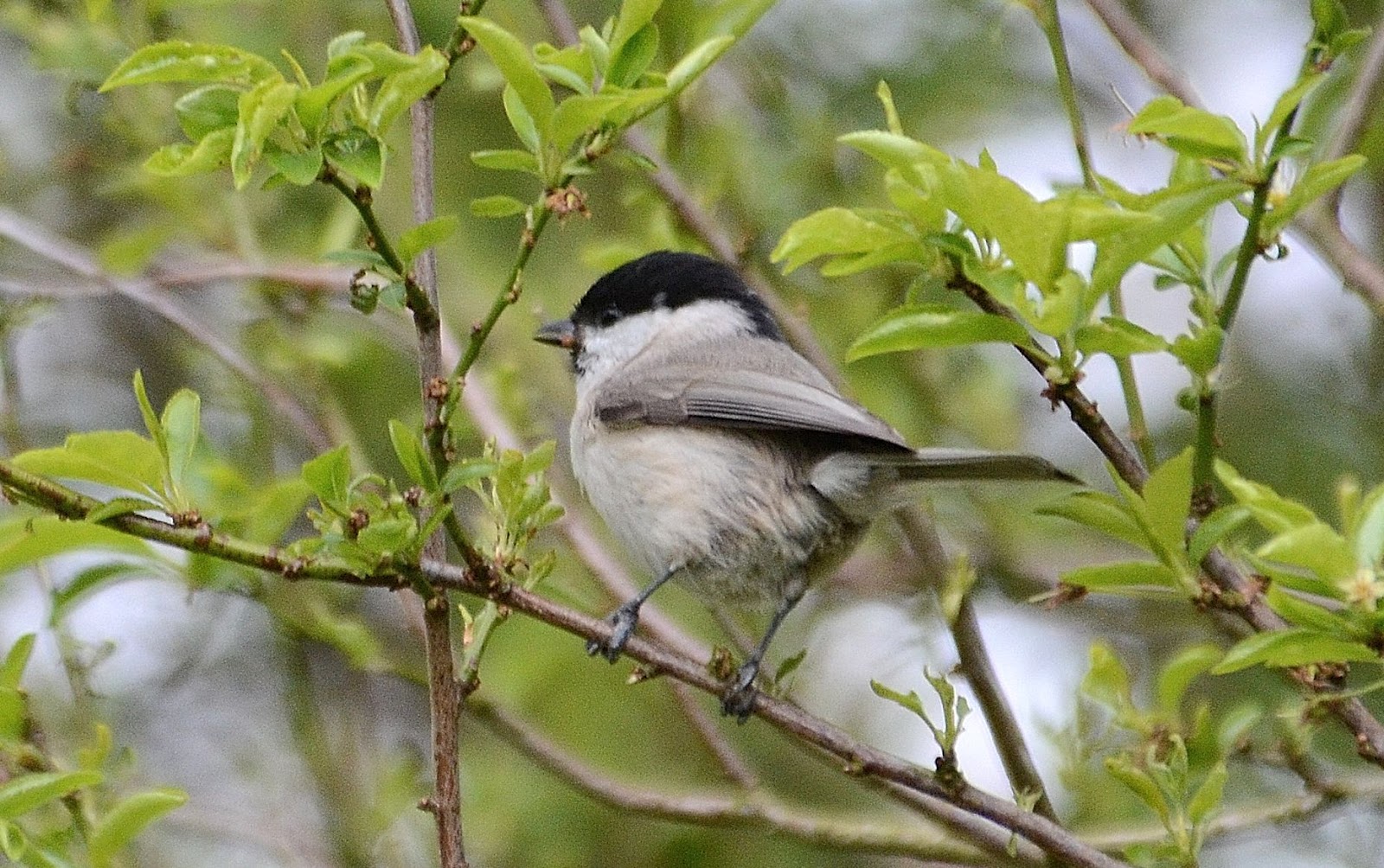
 Marsh Tit
 Sparrowhawk
 Treecreeper
Treecreeper 
 Red-legged Partridge
 Garden Warbler
 Garden Warbler
 Goldcrest
 Goldcrest
 Yellowhammer
 Pied Wagtail [female]
 Water Avens
 Butterbur
 Fly-past

Tuesday, 8 May 2012

Now You See Him, Now You Don't

Today we went around an area of a familiar reserve we’d never visited before.  Perhaps the biggest surprise was that the weather was quite nice – sunny and warm at times!  We set off around the wall of a reservoir where the best bird was a very confiding Common Sandpiper which allowed us some great views.  Opposite the new scrape area we had Whitethroat and Willow Warbler.  On the new area we saw Moorhen, Mallard, Greylag and on the return journey we had a pair of Grey Partridge in the same area.
We crossed a rickety bridge to circumnavigate an area of scrub and new growth which has been earmarked for a shooting estate.  We heard many Whitethroats, including 3 individuals involved in a chase and a fight.  A drake Gadwall flew over us several times calling, and seemed to be lost.  There were also several Sedge Warblers, and everyone was able to discern the white supercilium (eyebrow).  A male Kestrel hovered in the distance at various times and a Buzzard was seen soaring on a thermal.  We saw hundreds of Swifts in the air once we focused on the distant Buzzard, meanwhile Swallows flew along the drain banks and the fields through which we walked.
On one drain we saw several Tufted Duck and one pair of Pochard, but all these took to the air well before we got anywhere near them.  A little further along the drain I could just make out the song of a Grasshopper Warbler.  We retraced our steps a little to try & hear it a little more clearly, but we never came close to seeing it.  It was singing from an area of bramble well within the shooting estate.  However, after lunch it appeared in the open a few times, but so briefly the camera wasn’t quick enough to catch it.  All the images show a partially concealed bird.  The Grasshopper Warbler (or Gropper as many lazy birders call it) was a ‘lifer’ for the vast majority of the participants.  I’ve never heard the alarm call of a Grasshopper Warbler before but this one, as well as singing normally, suddenly made a harsher, deeper-pitched call, in the same manner of its standard song, almost as harsh as a Savi’s Warbler’s reeling.    In the afternoon I saw a quick blue flash of a Kingfisher flying away from us, but unfortunately no one else spotted it
As we got nearer to the end of our circuit I pointed out the well-worn track of an Otter, and we saw a male Barn Owl hunting for food at 11.30.  It probably has a growing family to support, and last night was very wet, so the better weather brought it out early.  Although we watched it for some time, we didn’t spot it making a kill.  It also had to contend with a male Kestrel, which mobbed it once & would probably have attempted to steal any vole the Barn Owl caught.  A few Linnets near the pumping station enlivened the final few minutes of the session.  
On the way back we called in at a new hide.  I heard a Treecreeper singing near here, but the bird itself remained concealed.  On the return journey the Common Sandpiper posed for the pics accompanying this post.  In the afternoon I heard the distinctive pathetic song of a stunning Yellow Wagtail, but the light was in an awkward position, so these were the best pics I was able to obtain. This very popular bird provided a very fitting end to a bright and sunny day.  

Grasshopper Warbler - in Reeling
 Still Reeling
Gone Silent 
 Yellow Wagtail - 'singing' not eating!
 Yellow Wagtail - Rear View
 Sedge Warbler
 ditto
 Barn Owl
 ditto
 Common Sandpiper
 Mute Swans
 Mute Swan

Monday, 7 May 2012

A Bird in the Hand is Worth Any Number in the Bush...

There has been a mini-influx of Wrynecks on the east coast & a little further inland after a series of easterly winds.  I was 10 minutes too late this morning to see the bird ringed at Spurn Point.  Luckily, Vince was there & he's happy to share the pictures on this site

All photos on this post (c) 2012 Vince Cowell

Wryneck - close-up of this extraordinary bird
 Wryneck in the hand
 Wryneck - note the tail
 Wryneck - one in the bush
 Linnet
 Black Redstart
 Drinker Moth Caterpillar